Tag Archives: Formation

A Season to Wait, A Moment to Move

Then the Lord said to me, “You have made your way around this hill country long enough; now turn north.
Deuteronomy 2:2-3 (NIV)

My company does a lot of customer research. It’s the core of what Intelligentics does. Just this week I’m working on four different customer research projects for clients. Over 30-plus years, it’s been fascinating to have observed how customer expectations have changed. Because of technology and stark generational differences the consumer landscape is changing at a brisk clip. Businesses are wise to invest in listening to their customers.

What has been growing as a key driver of customer expectation and satisfaction are time-related dimensions of service. We have become used to having a world of information at our fingertips. From a consumer perspective, we can do almost anything instantly on the phone in our hand at any time wherever we happen to be. The result? We are an increasingly impatient people. I see it every day in the data our customer research produces.

The impact of these changes is not just on business. It’s impacting life and relationships. It’s having a spiritual impact, as well.

Ever since I surrendered and committed my life to Jesus as a teenager, I have trekked this earthly journey as a faith journey. I am ever seeking the purpose God has for me and the Story He is authoring in it. In doing so, I have learned three important spiritual truths:

Timing is everything.
Waiting is hard.
God’s timing is perfect.

In today’s chapter, Moses continues sharing memories as mentorship to a new generation of Hebrew tribes preparing to enter the Promised Land. On the surface, the text feels a bit stale and boring. When I step back, however, and look at the Story that is being unpacked, it’s rich with these spiritual truths.

He tells of their 38 years of wandering.
Then God says, “It’s time. Turn north. Move.”
There command to move comes with instructions:
Don’t provoke Edom, Moab, or Ammon (they are family, even if estranged). God’s promise comes with boundaries.

Then comes the pivotal pivot:
It’s time to cross the Arnon Gorge—and now, now, God says, “Rise up. I have given Sihon king of Heshbon into your hands.” The battle begins, the land opens, and Israel steps into a season of forward motion after almost four decades of waiting.

Today’s chapter is about restraint, timing, and finally stepping into what God has purposed, planned, and prepared.

Which brings me back to our current world. I tap a screen and groceries appear. Click early enough in the day and the package will be on my porch before dinner. It’s no wonder we expect instant gratification. Technology has so successfully met this desire in so many areas of our lives that its increasingly driving expectation in every aspect of our lives.

How is this going to affect my faith journey? Spiritual formation and spiritual maturity take time. There are no short-cuts. There’s no pharmaceutical for instant wisdom. There is a discipline of Spirit that one learns as you ask, seek, and knock through seasons of waiting and wilderness wanderings. There is a form of obedience that requires restraint rather than action. There is an attentiveness required to be able to respond when the moment finally arrives.

“Turn north. Time to move.”

In the quiet this morning, I find myself reflecting on the many different seasons of waiting I have endured along this faith journey. Memory is a mentor. I’m also meditating on God’s call on me to move into a new season of life right now and all the feelings that stirs in my spirit after so many years of waiting. Finally, I find myself praying for my children and grandchildren, these next generations. I pray God’s grace to embrace the waiting in a world that is increasingly unwilling to do so.

And so, as the new day dawns, I ask for grace to wait well…
and courage to turn north when He whispers, “Now.”

If you know anyone who might be encouraged by today’s post, please share.

Promotional graphic for Tom Vander Well's Wayfarer blog and podcast, featuring icons of various podcast platforms with a photo of Tom Vander Well.
These chapter-a-day blog posts are also available via podcast on all major podcast platforms including Apple, Google, and Spotify! Simply go to your podcast platform and search for “Wayfarer Tom Vander Well.” If it’s not on your platform, please let me know!
An illustration of a book icon with an orange background, representing a digital platform for biblical study and reflections.

Exile Required

Exile Required (CaD Mi 5) Wayfarer

The remnant of Jacob will be in the midst of many peoples like dew from the Lord, like showers on the grass, which do not wait for anyone or depend on man.
Micah 5:7 (NIV)

This week our son-in-law began a new job in which he helps refugee families from other countries settle in our state. Clayton has a Ph.D. and his doctoral studies focused on refugee camps and the issues of displaced peoples, particularly in Africa. Even in the first few days, the stories he’s told us about these displaced families moving a world away to escape the ravages of their homelands and start a new life have left an impression on me.

A few years ago, our local gathering of Jesus followers spent two entire years focused on the exile of the Hebrew people when the Assyrian empire invaded the northern kingdom of Israel starting in 732 B.C. and later the Babylonian empire invaded the southern kingdom of Judah in 588 B.C. In each case, a large number of people were forcibly taken back to Assyria and Babylon to live as displaced refugees in exile. Micah prophetically proclaims both of these exiles and they are a major theme in his prophecy.

During the two years of studying these historic exile events, I came to appreciate the fact that exile is a recurring theme throughout the Great Story. Some major examples:

Adam & Eve, and subsequently humanity, are barred from the Garden to live in exile in the fallen world. (Gen 3)

Joseph was sold into slavery by his brothers and ended up living in exile in Egypt.

After being delivered from slavery in Egypt and before reaching the Promised Land, the Hebrew people lived in a 40-year exile wandering through the wilderness.

Jesus left heaven to come to earth in an exilic human life and death (Philippians 2)

As a baby, Jesus was taken in exile to Egypt to escape the threat against Him.

In the first century, after Jesus’ resurrection, persecution against Jesus’ followers in Jerusalem sent believers scrambling to live in exile throughout the Roman Empire. This became a major cause of the spread of the Jesus movement.

Here’s the spiritual lesson I learned in my study of exile, and a spiritual truth I’ve come to embrace: exile is quite often a necessary part of the spiritual journey. For me, it presented itself in the form of moving to places I never wanted to live, finding myself in jobs I didn’t want, and being socially ostracized after getting divorced. I have come to learn that God sometimes leads me to exilic places in life because there are spiritual lessons that only get learned in exile.

One of the lessons that presents itself in the exilic experience is one of Jesus’ core teachings: love your enemies and bless those who persecute you. In today’s chapter, Micah’s prophecy describes that the people who will be taken into captivity to live among their enemies will be a blessing to their enemies like a spiritual rain shower that refreshes dry places and spurs new life and growth where it lands. How ironic that when I am displaced, confused, frustrated, alone, and in a strange place among strangers, that is the exact time and place that God wants me to bless, love, and share.

How did wise men from the East know about the star of Bethlehem and travel from a distant land to bless the infant Jesus with extravagant gifts? It’s because while the Hebrews like Daniel were living in exile they shared with their “captors” their story and their prophecies and a King who would one day be born. That story was received and remembered for hundreds of years. It was so honored among these foreign people that they considered it worthwhile to make a very long journey to seek out a baby who they’d prophetically been told would be born.

In the quiet this morning, I find myself recounting some of the more difficult periods of exile in my own life journey and expressing gratitude for the spiritual lessons I learned from them. I find myself praying for others, from displaced refugees moving to a foreign land called Iowa to people who simply find themselves in the midst of exile-like life circumstances. I pray for open hearts to learn the spiritual lessons that are only learned in exile.

If you know anyone who might be encouraged by today’s post, please share.

The Man of Constant Sorrow

The Man of Constant Sorrow (CaD Jer 20) Wayfarer

Why did I ever come out of the womb
    to see trouble and sorrow
    and to end my days in shame?

Jeremiah 20:18 (NIV)

(Note: This is a good soundtrack for today’s chapter. It was going through my head as I read and wrote today’s post. 😉)

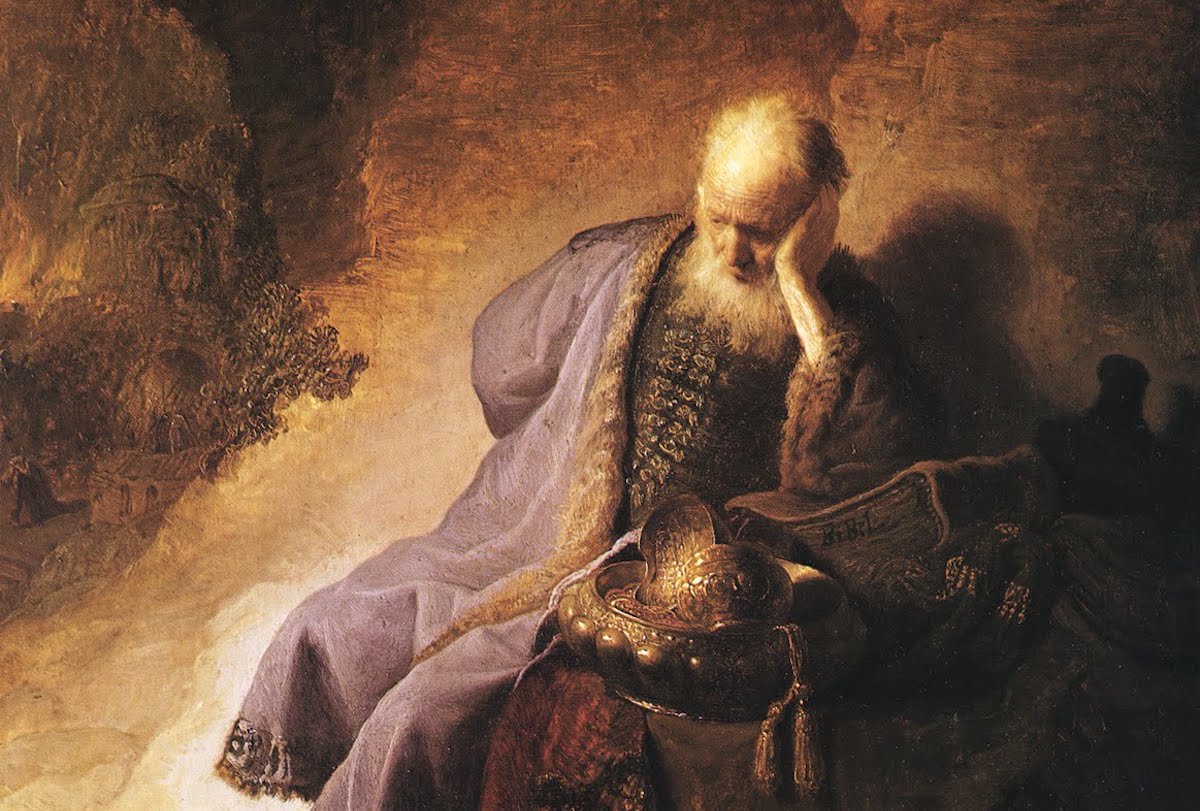
There is painting of Jeremiah by Rembrandt that hangs in the master bedroom at the lake. Jeremiah sits in a cave outside the city of Jerusalem, which is burning in the background outside the cave. It is just as he had predicted for decades. Jeremiah, and old man at this point, is isolated and alone. His head rests in his hand, his elbow propped on a copy of God’s Word. His prophetic words have all come true. He alone stood and proclaimed the truth when no one wanted to hear it. He was cancelled by the culture of his day. They mocked him, tortured him, beat him, and imprisoned him yet he refused to be silenced. Rembrandt captures the prophet in his “Aha!” moment, but there is no joy for Jeremiah in being right. There is only sorrow for his people who are being slaughtered and sent into exile. Perhaps he hears their cries and screams in the distance. It is out of this melancholy that Jeremiah will pen his Lamentations.

Jeremiah is known to history as “the weeping prophet.” One of the distinctive aspects of his prophetic writings is his David-like willingness to sing the blues. Six times in the first twenty chapters, Jeremiah has interrupted his prophetic message to the masses to issue his personal lament and complaint to the Almighty. The lament in today’s chapter (verses 7-18) is his longest and arguably most bitter. He complains about the bitter consequences of what God has called him to do, like being beaten and placed the stocks at the beginning of the chapter. He expresses his desire to quit his prophetic proclamations and walk away, but his inability to do so. He depressively expresses his wish that he’d never been born.

Jeremiah’s unabashed melancholy and willingness to express his raw emotions resonates deeply with me. I was recently introduced to a diagram that describes six stages in the path of spiritual formation and maturity. Between the third and fourth stages there is a line, a “wall.” It was explained to me that most people “hit the wall” after the third stage and revert back to the first stage. They are unable or unwilling to progress to the fourth stage that is essential in progressing to spiritual maturity. That fourth stage is labeled the “Inner Journey.”

I’ve contemplated this long and hard since it was introduced to me. I have observed that it is quiet common for individuals to refuse any kind of “inner journey.” I find it ironic that the Fourth Step of the Twelve Steps parallels the fourth stage of the diagram I’ve just described: “We made a searching and fearless moral inventory of ourselves.” The inner journey requires that I search my own motives, emotions, weaknesses, indulgences, reactions, and pain-points. I observed many for whom this inner-journey should be avoided at all cost. Yet, I find that Socrates had it right: “The unexamined life is not worth living.”

In the quiet this morning, I find in Jeremiah (and David before him) an unashamed willingness to freely express his deepest and darkest feelings of despair, rage, and disappointment. I find in Jeremiah’s lament the childlike sense of safety to throw an unbridled tantrum before an understanding and patient parent who sees the tantrum for the momentary meltdown it is in the context of broader and more mature knowledge. Along my life journey, I have personally discovered that it is ultimately a healthy thing when I vent and express my emotions, even the dark ones, in productive ways rather than stuff them inside and ignore them until they begin to corrode my soul and negatively affect my life from the inside out.

If you know anyone who might be encouraged by today’s post, please share.

Connect, Disconnect, Reconnect

The whole company that had returned from exile built temporary shelters and lived in them. From the days of Joshua son of Nun until that day, the Israelites had not celebrated it like this. And their joy was very great.
Nehemiah 8:17 (NIV)

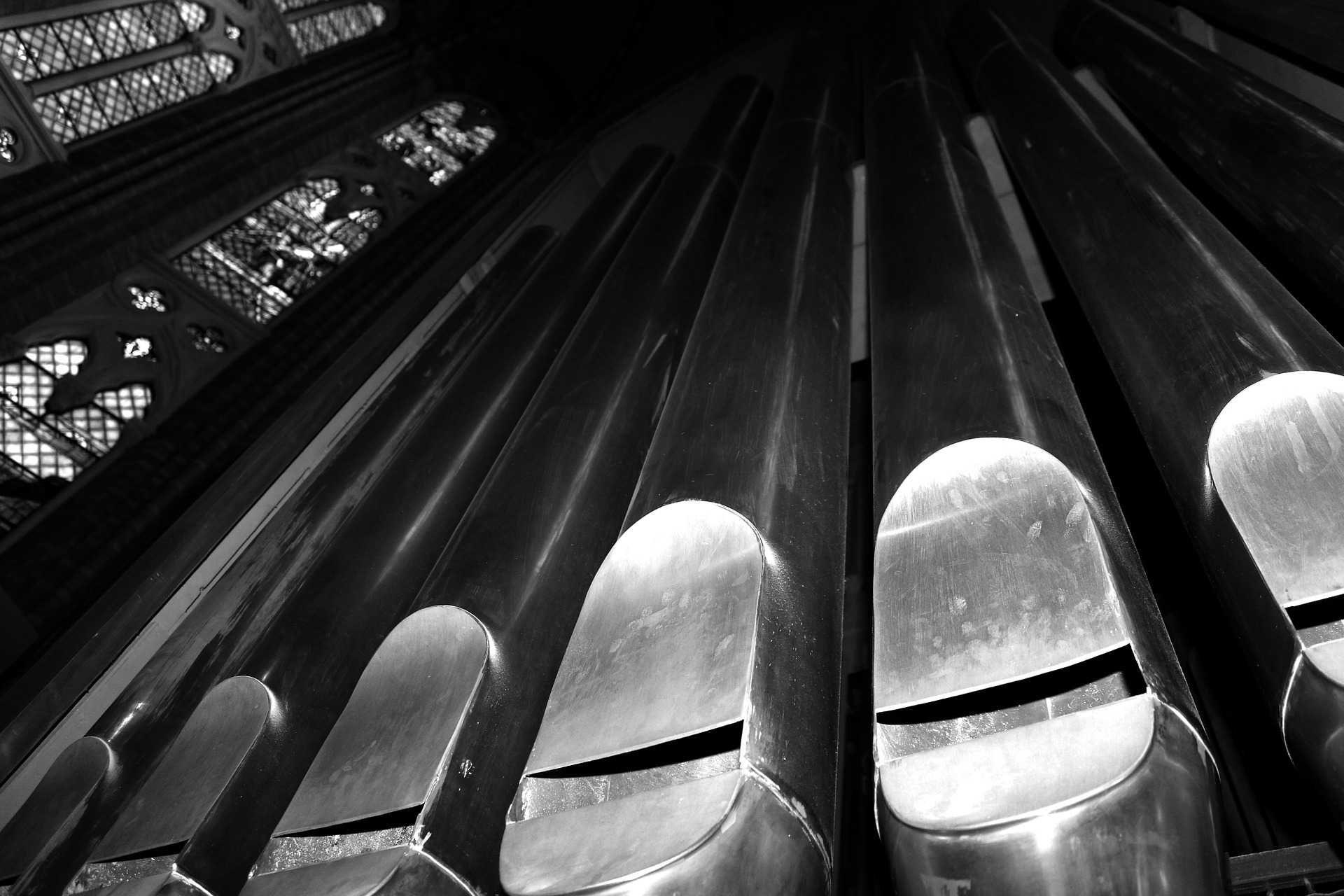
As a child growing up, I attended a protestant church that practiced what I would call a very “high church” worship. I was part of a children’s choir. We wore robes with embellishments that corresponded to the season of the church calendar, as did the minister. There was a lot of pomp and grand tradition complete with a pipe organ and stained-glass windows. The service contained many prescribed liturgical practices, responsive readings, and the like. As a child, it was at first all I knew and I found meaning in it all. As I got older, however, it all seemed a bit boring and empty. There grew within me a huge disconnect between my spirit and all the rote repetition of those high-church liturgical practices.

I became a follower of Jesus in my teens and quickly left the church of my childhood. I connected with a different church that had what I would characterize as a freer and more laid-back worship style. It felt more personal to me.

The ironic thing is, as I have continued on in my spiritual journey I have found myself reconnecting with some of the types of liturgical tradition I abandoned in my childhood. When I was a child they were empty of meaning for me, but as I have returned to them I have found them to have all sorts of rich meaning for me at this particular waypoint of life.

In today’s chapter, Ezra reads the law of Moses (the first five books of the Bible: Genesis, Exodus, Leviticus, Number, and Deuteronomy) out loud to all of the assembled exiles who had returned to Jerusalem and repaired the walls of the city. This is some 400-500 years before Jesus. The vast majority of the people were illiterate and had lived all or most of their lives in Babylon. Many had likely never heard the law of Moses read before.

In the Hebrew tradition, the law of Moses prescribed various feasts and festivals throughout the seasons of the year. The “Feast of Tabernacles” (a Tabernacle is like a tent or temporary shelter) happened in the fall and commemorated the Hebrew people camping out as they left slavery in Egypt and returned to the land of Canaan. When the Ezra and the people read about this festival, they realized that they should be celebrating it right then. So, they did.

Ezra and the people of Jerusalem reconnected to a tradition that had been lost and forgotten for centuries, and it was filled with all sorts of meaning for them.

Along my life journey, I have observed that this happens to us a lot as human beings. Traditions and rituals get abandoned and fade away as they lose meaning and connection for those of us repeating them. At some point down life’s road, we rediscover them at a point in our spiritual journey when they meaningfully connect and become spiritually filling. What was old becomes new, what was lost to us as meaningless and boring we find to have all sorts of meaning.

In the quiet this morning I am revisiting the many spiritual traditions that I have experienced in my journey. I’ve experienced a plethora of traditions from the liturgical high-church of my childhood to the Evangelical show. I have sat in the silence of a Quaker meeting house, been in the frenzy of a Charismatic revival meeting, and the energetic worship of a black Baptist church. I long ago abandoned any notion of any tradition being “right” or “wrong.” They are all simply different traditions that have something to teach me. Some connect with my spirit in ways others do not, but each tradition and ritual has something to teach me at different waypoints of my spiritual journey if I’m open and willing to learn them.