Tag Archives: Fight Song

Fight Song

Fight Song (CaD Ps 83) Wayfarer

Cover their faces with shame, Lord,
    so that they will seek your name.

Psalm 83:16 (NIV)

I consider it virtually impossible for a person in 21st century America to comprehend what life was like for the ancients, such as the songwriters of the Psalms. As evidence, I submit today’s chapter, Psalm 83, as Exhibit A for your consideration.

Psalm 83 is a song of national lament. It’s a plea to God to protect them from and destroy their enemies. A quick side note as I’m thinking bout it: One thing that has become really clear to me as I journey through the psalms the past few months is that David, who wrote most of the songs compiled in the first half of the anthology we call the Psalms, wrote personal songs expressing emotions he felt in his own circumstances. The songs attributed to Asaph, like today’s, were more about tribal and national issues. It’s the difference between me blogging about the stress I’m feeling in my own personal life and blogging about the issues surrounding the recent national election.

Asaph’s song was written at a time of national crisis when all of the people groups surrounding them were allied against them and bent on wiping them out. Here in North America, the nations that we see as a threat are an ocean away. For Asaph and the people of Judah, the enemies were less than 50 miles away. The map below is a scale of 50 miles and pinpoints all but one of the people groups mentioned in Psalm 83. Jerusalem is pretty much right in the middle. They were literally surrounded by 10 neighboring nations bent on ending their existence.

I try to imagine it. I live in Pella, a small town in rural Iowa. I try to envision being at war with every other sizeable town in a 30-mile radius. The Newtonians, the Knoxvillites, Oskaloosans, the not-so-Pleasantvillians, the New Sharonians, the Albians, the Monrovians, the Prairie Citians, the Montezumians, and the big empirical threat the Des Moinesiacs. If all these people groups immediately surrounding my town were banded together in an alliance to come and kill everyone in Pella and take everything we have and own as plunder, I would be feeling an incredible amount of stress. Welcome to the daily “kill-or-be-killed” realities of Asaph and his people.

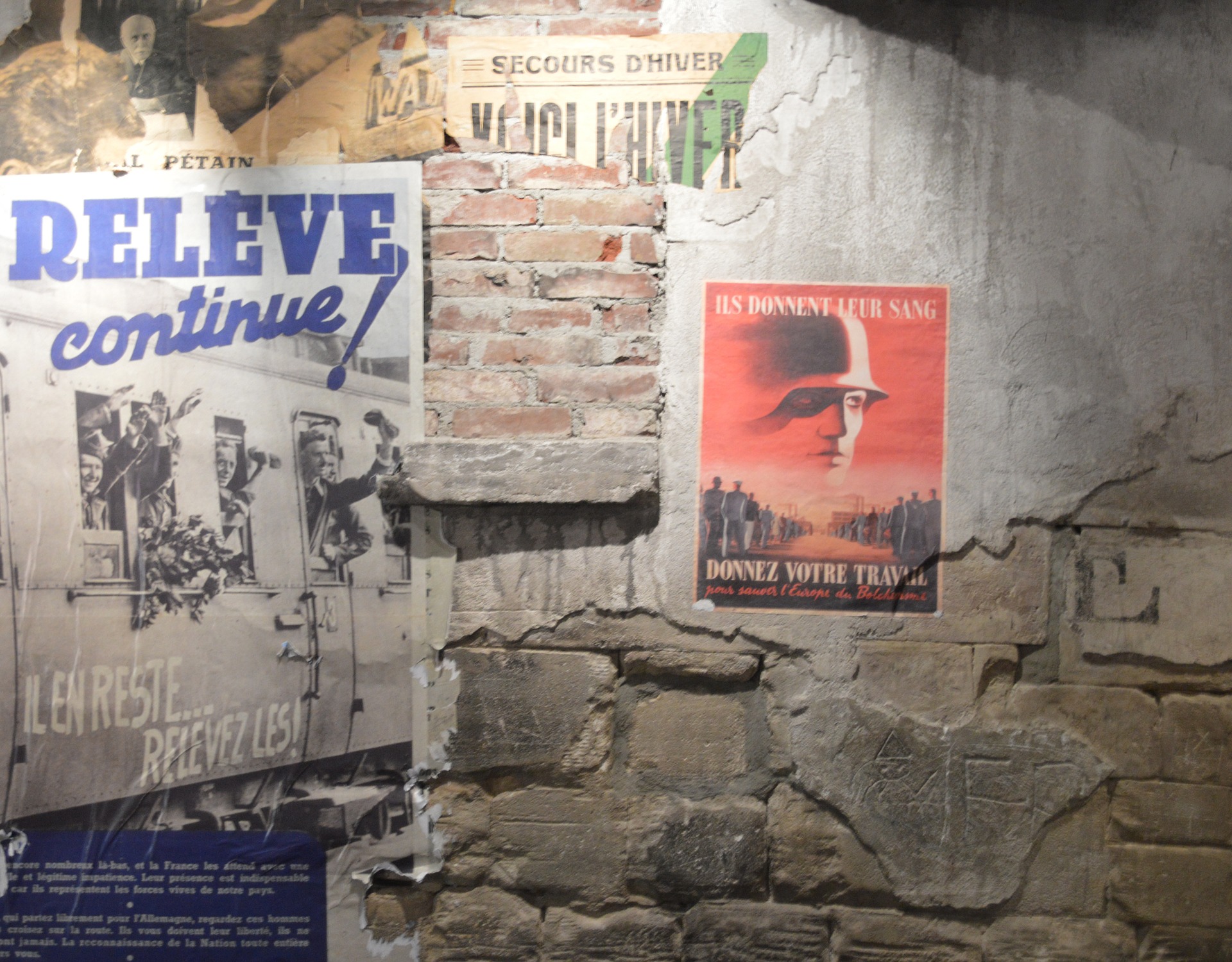
So, Asaph writes a spiritual fight-song asking God to protect them and fight for their existence. It’s a very human thing to do. We just commemorated Pearl Harbor Day on December 7 which was the last time America was seriously attacked and threatened back in World War II. It took me ten seconds to find a playlist on YouTube of American fight songs from that era including Praise the Lord and Pass the Ammunition, Stalin Wasn’t Stallin’ in 1943, Hot Time in the Town of Berlin (When the Yanks Go Marchin’ In). And who can forget Spike Jones’ famous lyrics:

When the Fuhrer says, “We is the master race,”
We sing:
“Heil” (blow a raspberry)
Right in the Fuhrer’s face.

How much life has changed in just two generations. I can hardly comprehend the realities of 80 years ago. How can I really comprehend Asaph’s realities over 2500 years ago?

The fact that I can’t comprehend Asaph’s realities leads me to extend him some grace as I try to wrap my head around the context of asking God to destroy my enemy. Which leaves me asking, “What am I supposed to take away from Psalm 83?”

That brings me to the lyric that stuck out at me this morning:

Cover their faces with shame, Lord,
    so that they will seek your name.

Underneath the cries for God to help them successfully defeat the enemy was a desire for their enemies to ultimately know God. When Jesus arrived on the scene hundreds of years later the situation was very different. The known world was ruled by the Roman Empire and while Jesus said that humanity can expect wars to continue right up until the end of the Great Story, He set the expectation that I, as His follower, would take a different approach to getting my enemy to “seek His name.”

“Here’s another old saying that deserves a second look: ‘Eye for eye, tooth for tooth.’ Is that going to get us anywhere? Here’s what I propose: ‘Don’t hit back at all.’ If someone strikes you, stand there and take it. If someone drags you into court and sues for the shirt off your back, giftwrap your best coat and make a present of it. And if someone takes unfair advantage of you, use the occasion to practice the servant life. No more tit-for-tat stuff. Live generously.

“You’re familiar with the old written law, ‘Love your friend,’ and its unwritten companion, ‘Hate your enemy.’ I’m challenging that. I’m telling you to love your enemies. Let them bring out the best in you, not the worst. When someone gives you a hard time, respond with the energies of prayer, for then you are working out of your true selves, your God-created selves. This is what God does. He gives his best—the sun to warm and the rain to nourish—to everyone, regardless: the good and bad, the nice and nasty. If all you do is love the lovable, do you expect a bonus? Anybody can do that. If you simply say hello to those who greet you, do you expect a medal? Any run-of-the-mill sinner does that.

“In a word, what I’m saying is, Grow up. You’re kingdom subjects. Now live like it. Live out your God-created identity. Live generously and graciously toward others, the way God lives toward you.”

I understand that there is a difference between international relationships and personal ones. All I know is that today, in my circles of influence, Jesus asks me to follow His instruction to love my enemy, bless my enemy, and pray for my enemy.

So, “Praise the Lord, and pass…” a little more love, joy, peace, patience, kindness, gentleness, goodness, faithfulness, and self-control.

Fight! Fight! Fight!

Fight! Fight! Fight! (CaD Ps 20) Wayfarer

Lord, give victory to the king!
    Answer us when we call!

Psalm 20:9 (NRSVCE)

I grew up a fan of the Minnesota Vikings and watched them every Sunday on television. It wasn’t until I was an adult with children of my own that I went to a game myself. I’ll never forget being in the nosebleed section at the top of the Metrodome when the Vikings scored. The entire crowd stood and sang the Vikings’ fight song.

What?! I had no idea they had a fight song. The television always cuts to a commercial after someone scores or else the commentators are providing their thoughts on the touchdown and showing replays in slow motion. I never realized that in the back ground a stadium full of Viking fans were singing.

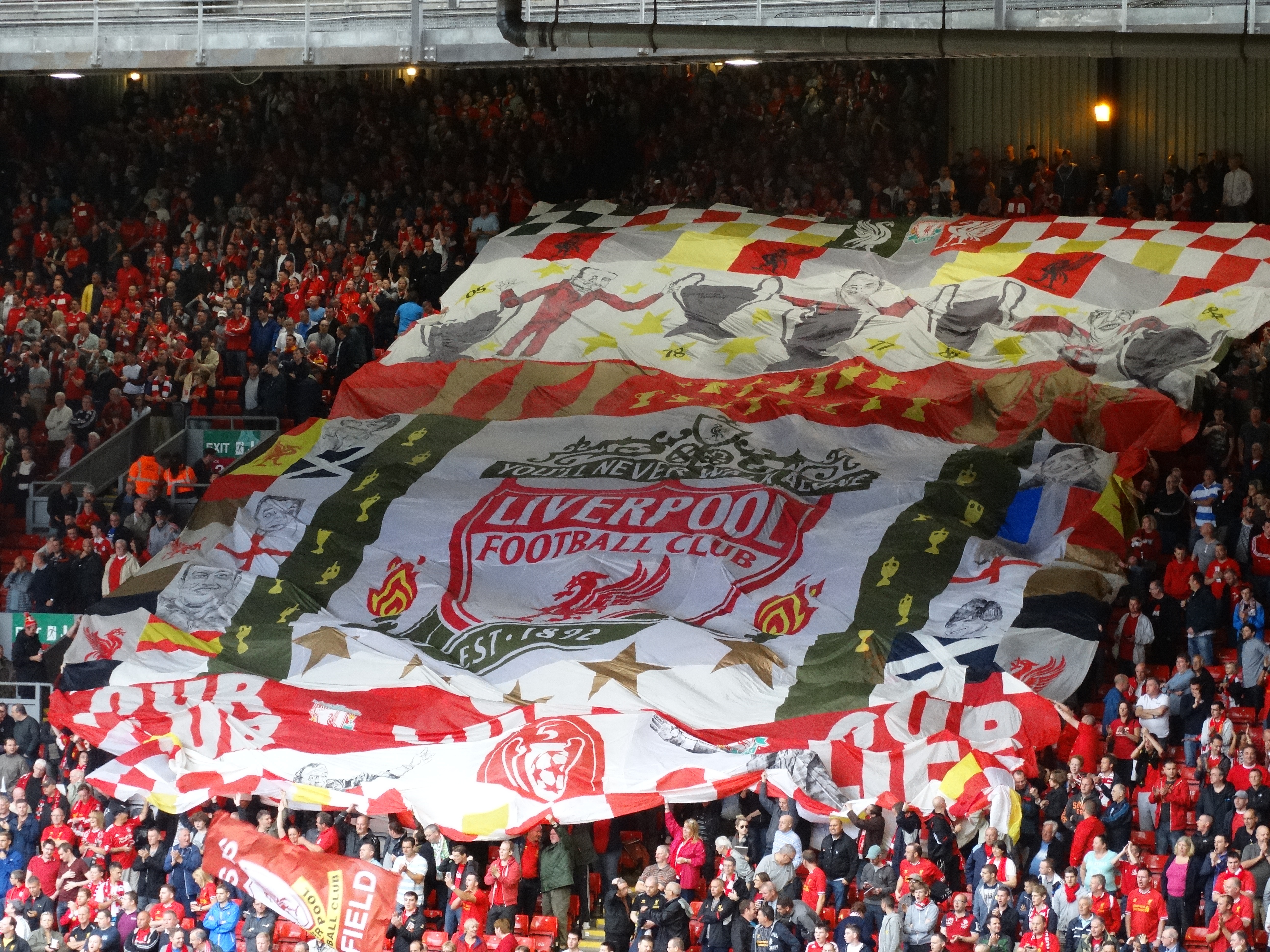
Fight songs are a part of sports, though we don’t give them much thought. When Wendy and I watch Liverpool in the Premier League play, the fans are singing almost non-stop through the entire match. They have different songs about different players. When Wendy and I were choosing which Premier League team we were going to cheer for (yes, we thoroughly weighed our options), we found out that before each game the Anfield stadium crowd sings You’ll Never Walk Alone by Gerry and the Pacemakers. Watching it on YouTube sealed the deal for us.

Music and the struggle for victory go hand-in-hand. Music brings unity and camaraderie to the masses. Music sung by a crowd stirs emotion and channels energy. It can lift spirits. It can encourage a team to dig deeper and motivate them to strive harder knowing there are tens of thousands behind them and cheering them on. They know it because they hear the singing.

Today’s psalm is basically an ancient fight song that David penned for his people to sing for him. It’s basically two verses with a one line chorus in between them. In the first verse, the people bless the king and ask that God would bless, support, and fight for David. The chorus asks God to give the king a spiritual blank check and grant all his requests. The second verse is an anthem of faith that God will assure the defeat of David’s enemies and ends praising God (not David) for the victory.

Back in Psalm 18, David wrote an epic song giving praise to God for all of his victories. It’s written in the first person, from David’s point-of-view. In contrast, today’s song is clearly intended to be sung by the people, the masses, the entire nation. In that way, it is an ancient version of a national anthem.

In the quiet, as I meditate on it this morning, I’m struck that David wanted to ensure that when his people sang about his victories, they ascribed the victory to God. King David had to have remembered when twenty-some years earlier he defeated Goliath, and the women all danced sang:

“Saul has slain his thousands,
    and David his tens of thousands.”

1 Samuel 18:7

It was that song that began to turn King Saul against David and wreak havoc on his life for years. Now that he’s king, Psalm 20 stands as a testament to the fact that David wanted to use his authority to ensure any fight song sung by his people for him would be a prayer for God’s blessing and would ascribe praise for the victory to God and not him.

An interesting side note. While we don’t know what the song would have sounded like, it must have been catchy. Archaeologists uncovered a papyrus fragment (Papyrus Amherst 63) that contains Psalm 20 virtually word-for-word but ascribes the prayer and praise to the Egyptian god Horus. Same song. Different team. It’s still common for high schools to steal a famous fight song tune and use it for their own.

As the wise sage of Ecclesiastes wrote: “There’s nothing new under the sun.”

Start of a new work week. I’m cheering you on. Hope it’s a good one.

If you know anyone who might be encouraged by today’s post, please share.