“Remember that you molded me like clay.
Will you now turn me to dust again?”
Job 10:9 (NIV)
Many years ago, I taught a class on creativity that was based largely on The Artist’s Way by Julia Cameron. The lessons and exercises in The Artist’s Way were instrumental in my own journey. God used them to bear the fruits of insight, understanding, and spiritual healing in me. In my class, I simply shared them and facilitated their work in others. I was amazed how the creative process allowed some individuals to express, perhaps for the very first time in their lives, traumatic events that had been a giant, suppressed, spiritual block for many, many years.
I have known individuals along my life journey who have had horrid experiences in life whether it was being the victim of a human perpetrator or the victim of an accident or natural disaster. I have observed many different ways in which people cope (or don’t cope) with the suffering. I have heard many different voices work through the stages of grief, or sometimes spiral into a perpetual cycle of despair.
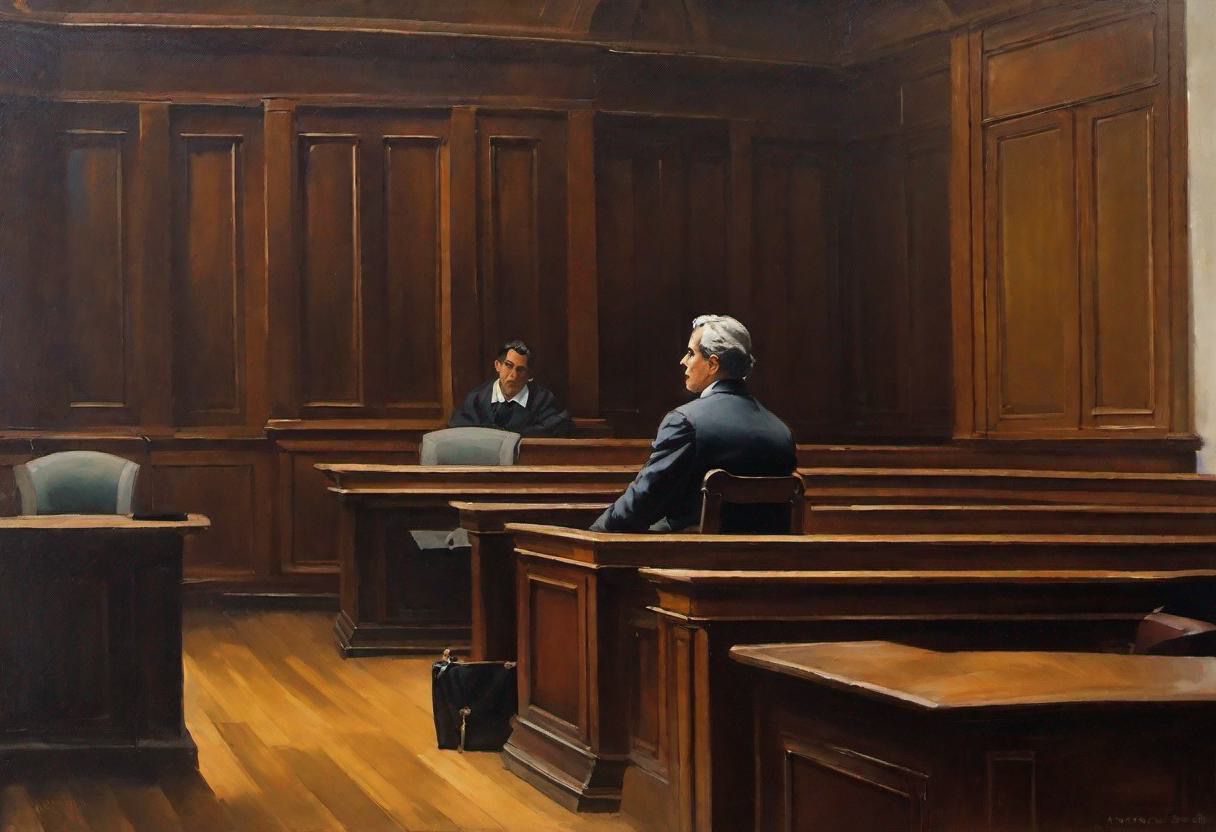
In the previous chapter, Job dreams of a courtroom drama in which he has the opportunity of taking God to court where he can put the Almighty on the stand and make God defend the suffering that Job accuses God of inflicting on him. In today’s chapter, Job continues to play out his mock trial before his three friends. He questions the heavenly defendant, before concluding, in despair, that whether he was guilty or innocent, God appears not to care.
I pondered Job’s prosecution of God this morning as if I was a juror in his improvisational courtroom play.
I don’t fault Job for his anger. He’s walking through the stages of grief like any other human being. But in his line of questioning, I noticed that Job has made some prosecutorial assumptions.
First, Job is assuming that God alone is the perpetrator of his earthly suffering. This is nothing new. We do that to this day. When a branch of my tree fell on the neighbor’s house and went through their roof the insurance company called it an “act of God.”
God gets blamed for a lot of things, but the Great Story (and the Job story) make it clear that the force of evil is also at play in this fallen world. We could spin into a philosophical discussion, of course, but for now I simply acknowledge that it was Satan who accused Job and was the perpetrator of his suffering. I find it ironic that after Satan afflicts Job he disappears in the story. I believe this to be one of evil’s common tactics, to perpetrate suffering and then pin the blame on God.
Job then asks God an interesting question:
“Remember that you molded me like clay.
Will you now turn me to dust again?”
It’s ironic because it points directly back to the Garden of Eden. After Adam and Eve sin, God explains the consequences of their sin. They will exit the Garden and live in a fallen world where sin holds sway, evil has dominion, and earthly life ends in death:
“By the sweat of your brow
you will eat your food
until you return to the ground,
since from it you were taken;
for dust you are
and to dust you will return.”
In accusing God of turning him into dust again, Job ignores the fact that death, suffering, and the consequences of sin has been humanity’s lot since Adam. Job lives on the same earth I do, in which evil exists and leaves innocent victims in its wake as it pursues power, greed, lust, and pride without regard to the pain, chaos, and death that naturally results. We also live in a fallen world in which rivers flood, hurricanes blow, volcanos explode, earthquakes rock, tornadoes spin, and tree limbs fall through your neighbor’s roof.
In the quiet this morning, I continue to feel for Job’s questions, his pain, the anger he feels in the seeming inequities of his experience. He had been living a pretty blessed existence that fit neatly into the box of his simple, contractual “Santa Clause” theology: “Do good and God blesses you. Do bad and God punishes you.” But my own life journey reveals that to be incongruent with what the Great Story actually reveals and what we experience on this earth.
In the midst of my own (relatively inconsequential) suffering along the way, I’ve had to do my own work through the stages of grief. One of the things that I discovered was that blaming of God for my suffering was actually denial of what God clearly reveals as the realities of life in a fallen, sinful world.
Sometimes you do nothing but good, and they crucify you for it.

If you know anyone who might be encouraged by today’s post, please share.