Tag Archives: Choose

Choosing to Know

Choosing to Know (CaD Ezk 30) Wayfarer

Then they will know that I am the Lord, when I put my sword into the hand of the king of Babylon and he brandishes it against Egypt.
Ezekiel 30:25b (NIV)

One of the changes in reality of life that I’ve observed along my life journey is how spread out family has become geographically. When my great-grandfather settled in northwest Iowa from the old country, his children all lived within a small geographical area their entire lives. My parents’ generation started spreading out around North America, My generation continued to spread, and our children’s generation has spread around the globe. While technology has made it easier and easier to communicate, there is no doubt that geographic distance makes it more difficult to know and be known.

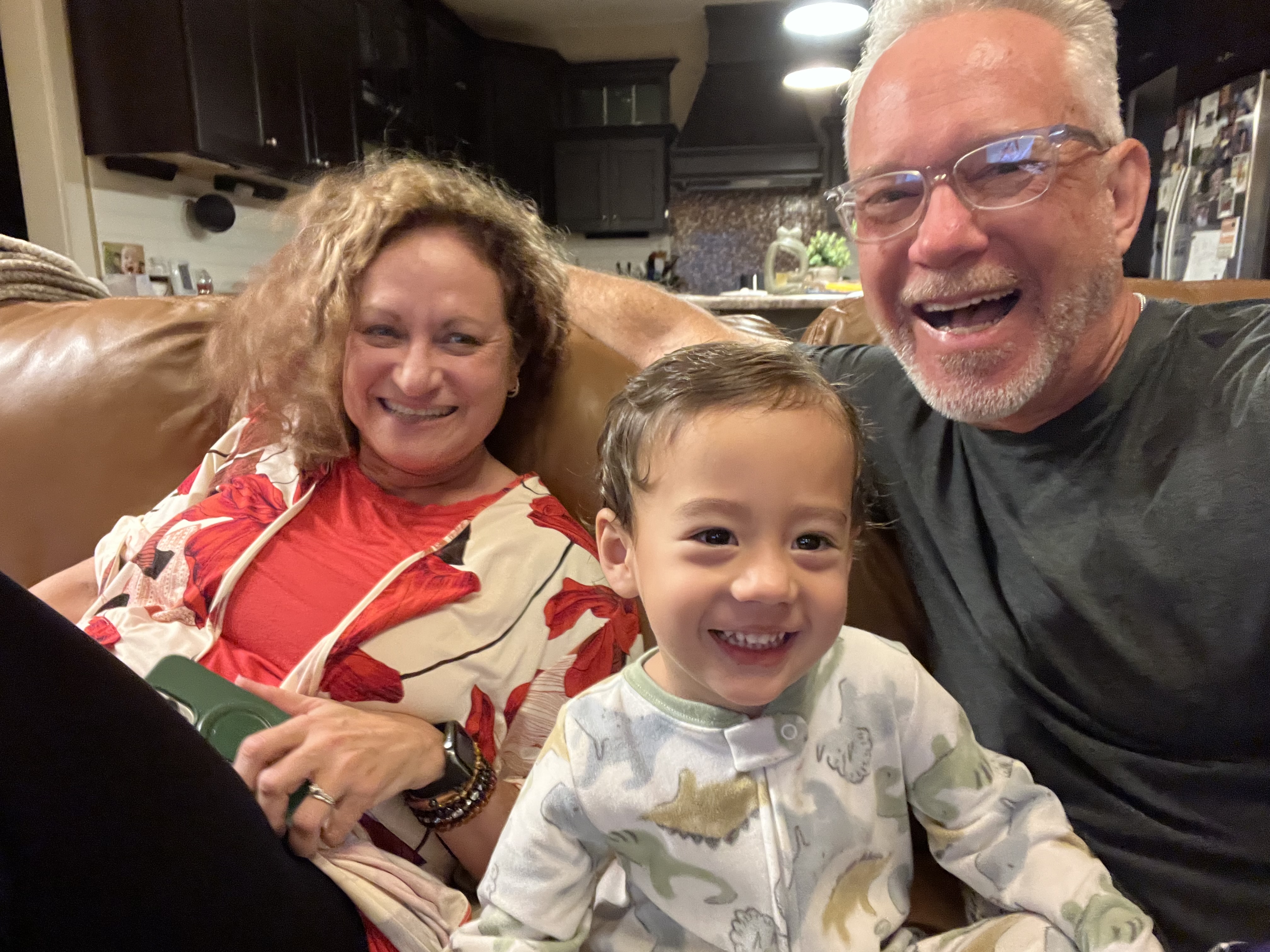
Yesterday, Wendy and I enjoyed time with family. Our nephew, Elias, celebrated his first birthday. Wendy and I headed to Ankeny where we hung out with five of our nephews and nieces. Wendy’s sister and her two kiddos are back in Iowa from their home in Mazatlan, and we’re feeling really blessed to have them staying with us in Pella for a few days. It was our first opportunity to meet our niece Rosie, and only the second time we’ve been physically present with our nephew, Ian. Of course, the first order of business was for the two of them to get comfortable knowing their Aunt Wendy and Uncle Tom.

We have 15 nephews and nieces. We love them all, but have varying degrees of relationship with them. Some of that is proximity, but some of it is also choices that are made.

One of the overarching themes of the entire Great Story from Genesis to Revelation is God’s expressed desire to be known and to have a relationship with the pinnacle of HIs creation, human beings who have the free will to choose or refuse to be in a relationship. Complicating this is the nature of evil which sets itself up against such a relationship.

In today’s chapter, Ezekiel continues his seven-part prophetic rant against Pharaoh and Egypt. Four times God through Ezekiel says, “Then they will know that I am the LORD.” I was once again struck by the synchronicity with the story of the ten plagues (or “strikes”) against Pharaoh back in the story of Moses, which I talked about in my message yesterday among my local gathering of Jesus’ followers. Pharaoh refused to know or acknowledge the God of Moses, though he had over a thousand gods of Egypt and was considered a god himself. In this, Pharaoh becomes an example of those who choose personal empire over a relationship with the God of Creation. Seven times in the ten plagues God says “then you will know that I am the LORD.”

One thousand years later, Egypt is still refusing to know and be known.

Ezekiel’s prophetic message was fulfilled. The Babylonians did invade Egypt, did defeat Pharaoh, and did a lot of damage. It would be the Persians, however, who would finish the job and complete the prophetic message. Ezekiel’s prediction that “no longer will there be a prince in Egypt” was fulfilled when Pharaoh Nectanebo II became the last Pharaoh ever in 340 B.C. The Pharaohs of Egypt remain an example to this day of hearts that remain hardened in their refusal to acknowledge and know Yahweh.

In the quiet this morning, I fast forward my thinking to Jesus, the Son of God, who came to earth that we might know God. The Story is the same. God inviting His creation to know and be known in an intimate spiritual relationship.

““I am the good shepherd; I know my sheep and my sheep know me— just as the Father knows me and I know the Father—and I lay down my life for the sheep.”
John 10:14-15 (NIV emphasis added)

Along my spiritual journey, I’ve come to understand that the degree to which I know God is proportionate to my willingness to choose into a relationship with Him and the degree of my refusal to do so.

If you know anyone who might be encouraged by today’s post, please share.

My Choice

My Choice (CaD Hos 14) Wayfarer

Who is wise? Let them realize these things.
    Who is discerning? Let them understand.
The ways of the Lord are right;
    the righteous walk in them,
    but the rebellious stumble in them
.
Hosea 14:9 (NIV)

I had a friend who spent time in Russia almost immediately after the fall of the Soviet Union. His visit was part of a educational mission and his team met with groups of educators from the ex-Soviet system. As he explained to me his experiences, he shared a simple recurring story that spoke volumes to him.

My friend had a set of different colored markers. He would hold out his hand with four or five different colors of markers and ask a participant to pick one. He said that his Russian hosts would always freeze-up and stare at him blankly. They refused to make a choice. His interpreter explained to him that under the Soviet system, there are no choices. They had always been given a marker and told which one to use.

Today’s chapter is the ancient prophet Hosea’s swan song message to his people. Despite thirteen chapters of dire warnings and prophetically foreshadowing an impending Assyrian invasion and exile, Hosea has not given up hope. Throughout the course of his messages, Hosea has repeatedly predicted that, even if his people end up suffering in exile, there will be a season of restoration and blessing on the other side. His final message channels this hope, envisioning a restored relationship with God and the blessing that will follow. He then ends his prophetic works with a choice.

Who is wise? Let them realize these things.
    Who is discerning? Let them understand.
The ways of the Lord are right;
    the righteous walk in them,
    but the rebellious stumble in them
.

Choice is a theme throughout the Great Story. Adam and Eve are given a choice to obey God’s command not to eat the forbidden fruit, or not. They chose not.

God said to His people through Moses:
This day I call the heavens and the earth as witnesses against you that I have set before you life and death, blessings and curses. Now choose life, so that you and your children may live.

Joshua said to the same people:
“But if serving the Lord seems undesirable to you, then choose for yourselves this day whom you will serve, whether the gods your ancestors served beyond the Euphrates, or the gods of the Amorites, in whose land you are living. But as for me and my household, we will serve the Lord.”

The prophet Elijah put it this way:
“How long will you waver between two opinions? If the Lord is God, follow him; but if Baal is God, follow him.”

The sage of Proverbs admonishes:
“Choose my instruction instead of silver,
    knowledge rather than choice gold,”

Jesus told His followers:
“Anyone who chooses to do the will of God will find out whether my teaching comes from God or whether I speak on my own.”

And James wrote to the followers of Jesus:
“…anyone who chooses to be a friend of the world becomes an enemy of God.”

In John’s Revelation Jesus described salvation as the simple choice of opening the door of one’s heart:
“Here I am! I stand at the door and knock. If anyone hears my voice and opens the door, I will come in and eat with that person, and they with me.”

In the quiet this morning, I find myself facing another day on this earthly journey in which I have many choices both large and small. The big choice of following Jesus helps determine all of the little choices of how I will react, respond, relate, think, speak, and act.

I endeavor to choose well over, and over, and over again.

If you know anyone who might be encouraged by today’s post, please share.

Finding Wisdom Amidst the Ruins

Chorazin

“Woe to you, Chorazin! Woe to you, Bethsaida! For if the miracles that were performed in you had been performed in Tyre and Sidon, they would have repented long ago, sitting in sackcloth and ashes. But it will be more bearable for Tyre and Sidon at the judgment than for you. And you, Capernaum, will you be lifted to the heavens? No, you will go down to Hades.” Luke 10:13-15 (NIV)

When you visit Israel, there are a million places you can visit. Jerusalem and the temple mount are a big attraction. Floating in the Dead Sea and trekking up to the fortress of Masada makes the top of most tourist’s list as does a dinner cruise on the Sea of Galilee. Then there is Megiddo, Mount Carmel, Mount Gilboa, the Garden Tomb, the Church of the Holy Sepulcher, The Jordan River, and on and on and on.

As I and my companions made our way around the north shore of the of Sea of Galilee, our guide, George, took a turn onto some back roads. It was obvious that we were off the beaten path. Even George, who knows the area like the back of his hand, seemed a bit lost for a few minutes. Finally we pulled into a group of ruins and got out. The site was desolate and bare. Unlike many sites in the Holy Land there was no hoopla. There were no trinket shops or refreshment stands. This place was clearly among the official sites to get scratched off the “must see” list for most tourists. The place was dead.

We were in the ruins of Chorazin, a small backwater town where Jesus once taught and performed miracles. The people of Chorazin did not respond favorably to Jesus message and miracles, however. I pondered Jesus’ words of woe as I walked silently among the ruined walls and abandoned buildings.

Wendy and I have been talking a lot this past week about the small daily choices we make and their cumulative effects. “I place before you Life and Death,” God once told His people before adding, “Choose life.” Along this journey I’ve come to realize that the choice of Life or Death is not a one time monumental decision, but a series of small daily choices that I make every day. What I choose to eat and how much of it I consume slowly affects my weight, my mood, and a myriad of other health issues. If I choose to sleep in and forget an important meeting it will affect my client relationship and, eventually, my income. If I consistently choose to give in to little bad habits they will eventually lead to very big consequences.

I snapped the picture above from the rubble of Chorazin looking out over the Sea of Galilee. It’s become a constant reminder to me that Jesus is both Savior and Judge. I find that I love to think of Jesus the Savior, but I like to conveniently forget Jesus the Judge. Woe to me for doing so, for amidst a judged Chorazin there is wisdom to be found for those who choose to wander in the ruins and digest Jesus’ words.

Chapter-a-Day Psalm 2

from familymwr via Flickr

“Let us break their chains,” they cry,
    “and free ourselves from slavery to God.”
Psalm 2:3 (NLT) 

I was chatting the other day with an avowed atheist. Raised as a child in the church, my friend was not taught to be an non-believer. At some point, for some reason, they chose out – and struck out on the path of unbelief. I find that fascinating and I look forward to more conversations and hearing more of my friend’s story.

I thought of my friend as I read today’s chapter and came to the verse above. Along the journey I’ve met many people who’ve chosen the path of unbelief. As they share their stories I’ve noticed that their decisions are often as much reaction as they are reason: anger against repressive parents, anger against injustices done by the religious, crisis of faith from a personal tragedy, and etc.

Every one has their story. Every one walks their own journey. Sometimes they choose a path I would not choose. And so, when we cross paths I try simply to walk along side, to listen, and to try and be the best friend I can be. Jesus told me never to judge (that’s His job, and His job alone), and always to love.

Chapter-a-Day John 10

by shefftim via Flickr

“The thief’s purpose is to steal and kill and destroy. My purpose is to give them a rich and satisfying life.” John 10:10 (NLT)

The further I get in the journey, the more keenly aware I am of both life and death. I want to be about things that are life giving and avoid those things that hint, or reek, or lead to death.

Each day I get to make a dizzying number of choices about what I think, say, and do as well as choices regarding things to which I watch, listen, and read.

More and more I find myself asking “is this life-giving, or does this hint of death?”

I choose life.

Chapter-a-Day Jonah 1

Now the Lord provided a huge fish to swallow Jonah, and Jonah was in the belly of the fish three days and three nights. Jonah 1:17

For the sailors to live, Jonah had to sacrifice himself.
For Jonah to live God’s purpose he had to die to himself.
To be washed from his sin, Jonah had to be plunged forcefully in the waters.
To pass from death to life, Jonah was buried for three days.
For the Ninevehites to experience salvation, Jonah had to die, be buried, and be resurrected.

The word picture of salvation in Jonah is so striking that even Jesus could not help but draw attention to it:

Matthew 12:39-41
[Jesus] answered, “A wicked and adulterous generation asks for a sign! But none will be given it except the sign of the prophet Jonah. For as Jonah was three days and three nights in the belly of a huge fish, so the Son of Man will be three days and three nights in the heart of the earth. The men of Nineveh will stand up at the judgment with this generation and condemn it; for they repented at the preaching of Jonah, and now something greater than Jonah is here.”

Luke 11:30
“For as Jonah was a sign to the Ninevites, so also will the Son of Man be to this generation.”

The further I get in the journey, the more convinced I am that once God truly calls a person, he or she cannot successfully run away forever. The story of Jonah is lived out again and again in the lives of those who are called according to His purpose, and for whom all things work together for good.