Tag Archives: Catching Hell

Sacrifice and Scapegoats

Sacrifice and Scapegoats (CaD Lev 16) Wayfarer

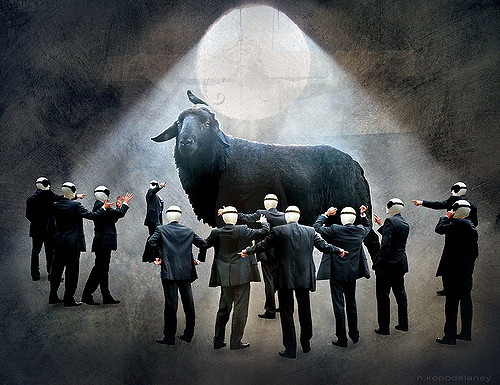
[Aaron, the high pries] is to lay both hands on the head of the live goat and confess over it all the wickedness and rebellion of the Israelites—all their sins—and put them on the goat’s head. He shall send the goat away into the wilderness in the care of someone appointed for the task. The goat will carry on itself all their sins to a remote place; and the man shall release it in the wilderness.
Leviticus 16:21-22 (NIV)

They are playing baseball in Arizona and Florida. Spring Training is underway and the regular season is right around the corner. Wendy and I have already begun watching some of the Cubs’ spring training games. Hope springs eternal every March for baseball fans.

Several years ago, I was fascinated when ESPN made a documentary about one of the most infamous events in the history of the Cubs and all of sports. With one out in the top of the 8th inning and a 3-0 lead, the 2003 Cubs were just five outs away from punching their ticket to the World Series for the first time since 1945. A fly ball to left field fell right on the edge of the wall and a fan named Steve Bartman reached out to catch it as the Left Fielder, Moises Alou attempted to do the same. The ball was bobbled. Alou was furious. The Cubs fell apart, giving up eight runs. The crowd turned on Bartman. They taunted him, threw beer on him, threatened him, and the police were called to escort him from Wrigley Field. It was one of the most tragic events I’ve ever witnessed.

The ESPN documentary about the incident was entitled Catching Hell and in the documentary they explored the theme of scapegoating in sports. One life-long, loyal fan does what any human being at a baseball game naturally does. I’ve been going to baseball games my entire life and I’ve always dreamed of catching a foul ball. It’s never happened. Bartman does what I would have done, what anyone would have done. But suddenly, the pent up frustrations, anger, and even rage of an entire tribe of fans is channeled into blaming this one innocent member of their own tribe for the perpetual failures of their team. The documentary went into the history of scapegoating, which led them to today’s chapter.

In the sacrificial system that God set up for the ancient Hebrews there were regular offerings for sin that people brought to God’s traveling ten temple. These included “sin” offerings. Yet, once a year, God prescribed a “Day of Atonement.” It was the only time that the high priest (or anyone) entered the “Most Holy Place” in the traveling tent temple where the Ark of the Covenant was placed [cue: Indiana Jones theme]. This was the one major sacrificial offering for the sins of all the Hebrew people and priests. The high priest actually starts with two goats. One will be sacrificed. The other is the scapegoat. The high priest lays his hands on the scapegoat and the sins of the entire nation are transferred to it. That goat is led into the wilderness and released, metaphorically carrying away the sins of the people. (BTW: Have you ever noticed that the symbol of Satanism is the head of a goat?)

Today’s chapter is, once again, key in understanding who Jesus was and what He came to accomplish. Jesus was the ultimate atoning sacrifice bringing grace and forgiveness to all who would believe and receive it. All of sin was placed on Him, God’s own innocent Son. As Paul put it: “God made Him who had no sin to be sin for us.”

Nevertheless, we continue to scapegoat individuals in all sorts of situations rather than doing what Jesus called on me to do as His disciple and forgive, as I’ve been forgiven. Jesus even exemplified this while hanging on the cross when He said, “Father, forgive them. They have no idea what they are doing.” The institutional church failed to do this when, once they became the Holy Roman Empire and had all of the worldly power, they decided to make the Jewish people scapegoats for executing Jesus (despite the fact that Jesus made it clear this was the way it was meant to be, and chastised Peter and the boys for trying to stop it or use violence in His defense). The rise of antisemitism and the scapegoating of the Jewish people within the church evolved over time, but it began with the first Christian Emperor, Constantine in the 4th century. If you watch the news, you know it is still happening today.

In the quiet this morning, I’m reminded how relevant Leviticus is today for those who are willing to see it. As a disciple of Jesus, I’m reminded that I am called to follow Jesus’ example and graciously forgive, even when the rest of the crowd is scapegoating and every ounce of me feels like jumping on the toxic gravy-train. I’m also equally reminded that Jesus’ atoning sacrifice means that grace, mercy, and redemption are available to anyone, regardless of their sins – even scapegoats.

In 2016, after winning their first World Series since 1908, the Chicago Cubs owners and organization quietly delivered one of the team’s World Series rings to Steve Bartman.

If you know anyone who might be encouraged by today’s post, please share.

These chapter-a-day blog posts are also available via podcast on all major podcast platforms including Apple, Google, and Spotify! Simply go to your podcast platform and search for “Wayfarer Tom Vander Well.” If it’s not on your platform, please let me know!

The Scapegoat

 Then Aaron shall lay both his hands on the head of the live goat, and confess over it all the iniquities of the people of Israel, and all their transgressions, all their sins, putting them on the head of the goat, and sending it away into the wilderness by means of someone designated for the task. The goat shall bear on itself all their iniquities to a barren region; and the goat shall be set free in the wilderness.
Leviticus 16:21-22

It was a gorgeous summer evening last night. Wendy and I headed to Des Moines as the guest of some fellow Cubs fans for a game between the Iowa Cubs and the Oklahoma City Dodgers. It was one of those nights for our boys of summer. They gave up five runs in the first and then couldn’t manage to get more than a couple of hits the rest of the evening.

As the evening wore on and our defeat became more certain, our section began to find raucous reasons to celebrate little victories. Our friends and ball park neighbors began swapping Cub stories. At some point the conversation turned to the tragic event for all Cubs fans in this generation: the Bartman ball. It was the National League Championship Series and our Cubs were just a few innings away from their first World Series since 1945. A fly ball to left might have been caught by the left fielder but a Cubs fan reached out to catch the ball and the fielder’s attempt at the put out was thwarted. The left fielder went ballistic and cussed out the fan. The crowd turned on the fan as the Florida Marlins scored several runs which turned into a run of victories and the Cubs hopes for a World Series were, once again, tragically thwarted.

The fan in question became the center of ridicule for a nation of Cubs fans. A life-long Cubs fan himself, he was blamed for the team’s tragic end. He had to be escorted from the game and eventually moved away from the region.

In 2011, an ESPN documentary entitle Catching Hell took a long hard look at the incident as a classic example of “scapegoating” in the world of sports. The word “scapegoating” and its legacy come from today’s chapter in Leviticus 16. In the ancient Hebrew sacrificial system, once a year the High Priest would metaphorically place all of the sins of the nation on one goat. That goat was then taken to a barren place in the wilderness and released. The word picture was that the sins, guilt and blame of many was placed on one to be carried away in banishment.

Scapegoating happens in every level of societal systems. There are plenty of examples in the world of sports, and it isn’t just about sports. Children become the scapegoats in families, ceaselessly blamed for everything bad that happens within the system A spouse can be scapegoated within marriage. An employer or employee can become a scapegoat for business woes. A political figure can be scapegoated for the woes of a city, a state, or the nation. It is at the core of fallen humanity. We seek to blame someone else for the ills we experience.

Over a decade later, our discussion of the Bartman ball took on a more civilized and objective tone last night. It wasn’t right. If the left fielder had been strong enough to shrug off the interference and casually return to his position, the game and the season may have ended differently. The discussion turned inward. One of our party admitted that, had they been present, they would very likely have been swept into the sentiment of the crowd. Truth is, we all would.

This morning I’m thinking about my own penchant for scapegoating. I’m pondering ways in which I focus blame on others for painful circumstances in my own life. It’s not fun to admit, but it is, universally, a very human thing to do. Perhaps that’s why God sought to make it part of the Hebrew sacrificial system. We need to be reminded regularly. We need more than a scapegoat. We need a savior. God would address that too…

The next day John [the Baptist] saw Jesus coming toward him and said, “Look, the Lamb of God, who takes away the sin of the world!

chapter a day banner 2015

featured image from Hartwig HKD via Flickr