Tag Archives: Call

Trumpet Sound

“The sons of Aaron, the priests, are to blow the trumpets. This is to be a lasting ordinance for you and the generations to come.”
Numbers 10:8 (NIV)

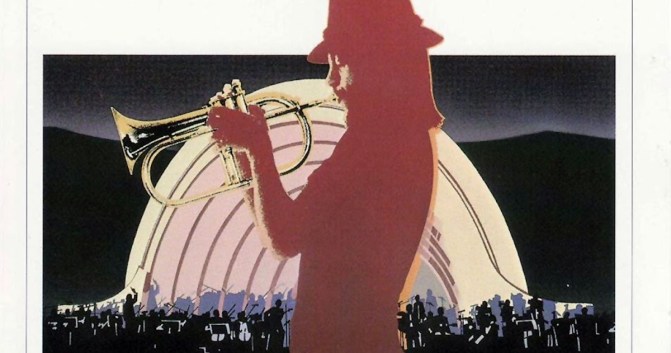
I was saddened yesterday to hear of the death of Chuck Mangione. The jazz trumpeter made famous by playing his iconic flugelhorn, was among the best trumpet players of the late 20th century. His Live at the Hollywood Bowl album (and yes, I owned the vinyl LP), in which he played his most memorable works with full orchestra, was a regular part of the rotation on the playlist of my bedroom stereo as a teenager. There’s just something about the sound of a trumpet being played well.

In today’s chapter, God commands Moses to have two, special silver trumpets made. He then commands that the priests use these trumpets for multiple purposes:

  1. Calling all of the people to gather.
  2. Calling the leaders of the twelve tribes to gather.
  3. To let the tribes know when it’s time to begin marching.
  4. Before you go into battle against an opposing army.
  5. When you rejoice and make offerings at one of the prescribed festivals.

God is, here in the early chapters of the Great Story, establishing a metaphor that will be thematically used throughout the entirety of Story. In fact, the first mention of a trumpet came two-years before today’s chapter when the freed Hebrew slaves reached Mount Sinai and first camped beneath the mountain. God’s presence descended on the top of the Mountain:

“On the morning of the third day there was thunder and lightning, with a thick cloud over the mountain, and a very loud trumpet blast. Everyone in the camp trembled.
Exodus 19:16 (NIV)

While it’s certainly possible God had an angel sound the trumpet (as He does throughout the Great Story), from the Hebrews’ perspective, it was God Himself playing a trumpet blast on top of the mountain announcing His presence and it send chills down their spine.

God even calls one of the prescribed regular national festivals for His people the Festival of Trumpets. God regularly uses the metaphor of trumpet blasts through the prophets most often to signal that God is speaking or has something to say through His messenger. Jesus told His followers that in the end times Father God will “send his angels with a loud trumpet call, and they will gather his elect from the four winds, from one end of the heavens to the other.” In the Revelation given John of the end times there are seven judgements on the earth marked by a trumpet blast. In fact, the trumpet is used more in Revelation than any other book in the entire Story, and the final trumpet blast prompts the Hallelujah Chorus by heaven’s angelic choir:

 “The kingdom of the world has become the kingdom of our Lord and of his Messiah, and he will reign for ever and ever.”

So, as I get to the end of another work week, I find myself meditating on the sound of trumpets. The sound of the trumpet brings to mind the words of the Sage of Ecclesiastes because the trumpet blast typically marked that it was “time”…

Time to gather.
Time to move.
Time to rejoice.
Time for God to speak.
Time for a long appointed event to take place.

In the quiet, my mind travels back to yesterday’s thoughts on learning to go with the flow of what God is doing. Just as I mentioned, much of this spiritual journey has been about waiting, being patient, and awaiting the moment for the right moment. In other words, I have found that this life journey has been learning to spiritually listen for the sound of God’s trumpet.

There’s just something about the sound of a trumpet.

R.I.P Chuck.

If you know anyone who might be encouraged by today’s post, please share.

Promotional graphic for Tom Vander Well's Wayfarer blog and podcast, featuring icons of various podcast platforms with a photo of Tom Vander Well.
These chapter-a-day blog posts are also available via podcast on all major podcast platforms including Apple, Google, and Spotify! Simply go to your podcast platform and search for “Wayfarer Tom Vander Well.” If it’s not on your platform, please let me know!
An orange and white logo featuring an open book, symbolizing the Bible or scripture.

The Bride

The Bride (CaD Jer 2) Wayfarer

“This is what the Lord says:
“‘I remember the devotion of your youth,
    how as a bride you loved me
and followed me through the wilderness,
    through a land not sown.”

Jeremiah 2:2 (NIV)

One of the keys to unlocking the power of the ancient prophets is to understand both the context of their time and circumstances in history and the metaphors they use in addressing them.

Jeremiah’s prophetic ministry began during the reign of King Josiah of Judah (648-609 BC). The authors of Kings and Chronicles have made it clear that the Hebrew people have spent most of their nearly 300 years as divided kingdoms breaking the first two of God’s Top Ten rules for life (1. No other gods 2. No idols). By the time Josiah ascends the throne, there had been 19 successive kings in Israel who all promoted the worship of local and regional pagan idols. Of Josiah’s 15 predecessors in Judah, seven had been outright idolatrous and most of the others maintained a policy of appeasement with those who wanted to worship gods other than Yahweh. The result was that even the worship of the God of Abraham, Moses, and David had been diluted to the point that it was an empty shell of what God had prescribed for worship as Moses led the Hebrew tribes out of slavery in Egypt.

King Josiah led a massive reformation after a copy of the Law of Moses was discovered in a storage closet in Solomon’s Temple. The fact that it had been lost in a Temple junk room lends evidence to how far worship had strayed from God’s design. Even the priests of God had not read or taught God’s law in who knows how long. Solomon’s Temple itself had become a polytheistic religious center in which shrines and altars to pagan gods were placed alongside the altar God had prescribed back in Exodus. After three hundred years of polytheistic political accommodation, it’s hard to believe that young Josiah’s dictatorial reforms were universally well-received by his people.

It’s in this period of religious reformation and the resulting political tension that a young Jeremiah begins his prophetic career. Jeremiah and Josiah got along well, and Jerry’s career took off under the power and protection of Josiah as his benefactor.

Today’s chapter is the first of Jerry’s recorded prophetic messages. He addresses God’s people with one overarching metaphor: marriage. The Hebrew people were God’s young bride. God initiated through Abraham and then again in Moses, God pursued her in Egypt, God secured her, and God led her out of slavery and into a covenant relationship. God provided for her and led her to a home He prepared for her. What He asked of her was faithfulness.

By the way, Jesus used this same marital metaphor. His followers are His bride. At the Omega Point of the Great Story is a wedding and the greatest wedding feast of all time (Rev 19:7-9).

As for Jeremiah, he sits amidst Josiah’s mandated reform and hears the grumbling of the idolaters who desire to go back to their shrine prostitutes and fertility orgies. He sees those who gave lip service to Josiah’s reforms but meet secretly with their idols on the down-low. In this, he envisions God’s bride following indulgent appetites into adulterous liaisons only to justify her actions and lie to herself that her husband doesn’t care.

In the quiet this morning, I can’t help but escape the power of Jeremiah’s metaphor as I face my past. I know the reality of a broken marriage and divorce. I have experienced “youthful devotion” that led to a broken marital covenant. I stand guilty like Jeremiah’s audience. The unspoken question, of course, is “What am I going to do about it?” The calling of a prophet is to call God’s spiritually wayward people to repentance, to find the Prodigal knee-deep in the pig slop, and suggest he consider returning home. And from his first message, Jeremiah is on-task.

As I meditated on the chapter this morning, a line from an old hymn popped into my head and heart:

Prone to wander, Lord I feel it. Prone to leave the one I love.”

I head into today with introspection. Where, in my spiritual journey, am I prone to wander? In what ways do my own appetites beckon me to indulge and lead me away from the One I love? The following line in the hymn describes my heart’s cry:

“Here’s my heart. Oh, take and seal it.”

If you know anyone who might be encouraged by today’s post, please share.

Willingness

Willingness (CaD Jud 6) Wayfarer

That same night the Lord said to [Gideon], “Take the second bull from your father’s herd, the one seven years old. Tear down your father’s altar to Baal and cut down the Asherah pole beside it. Then build a proper kind of altar to the Lord your God on the top of this height. Using the wood of the Asherah pole that you cut down, offer the second bull as a burnt offering.”

So Gideon took ten of his servants and did as the Lord told him. But because he was afraid of his family and the townspeople, he did it at night rather than in the daytime.
Judges 6:25-27 (NIV)

I recently read the story of Angie Fenimore’s Near-Death Experience (NDE). Her body died and she descended to a hell-like place. This is an excerpt of her story:

I knew that I was in a state of hell, but this was not the typical fire and brimstone hell that I had learned about as a young child.

Men and women of all ages, but no children, were standing or squatting or wandering about on the realm. Some were mumbling to themselves. The darkness emanated from deep within and radiated from them in an aura I could feel. They were completely self-absorbed, every one of them too caught up in his or her own misery to engage in any mental or emotional exchange. They had the ability to connect with one another, but they were incapacitated by the darkness.

But worse was my growing sense of complete aloneness. Even hearing the brunt of someone’s anger, however unpleasant, is a form of tangible connection. But in this empty world, where no connections could be made, the solitude was terrifying.

Then I heard a voice of awesome power, not loud but crashing over me like a booming wave of sound; a voice that encompassed such ferocious anger that with one word it could destroy the universe, and that also encompassed such potent and unwavering love that, like the sun, it could coax life from the Earth. I cowered at its force and at its excruciating words:

“Is this what you really want?”

Suddenly I felt another presence with us, the same presence that had been with me when I first crossed over into death and who had reviewed my life with me. I recognized that he had been with us the whole time, but that I was only now becoming able to perceive him. What I could see were bits of light coming through the darkness. The rays of light penetrated me with incredible force, with the power of an all-consuming love.

I had to ask, why me? Why was it that I could see God while the vacant husk of a man next to me could not? Why was I absorbing light and being taught, while he was hunkering down in misery and darkness?

I was told that the reason is willingness.

Read or watch Angie’s complete story.

In today’s chapter, we have the beginning of the ancient story of Gideon in which God calls Gideon to lead the Hebrew tribes against their enemies. What struck me as I meditated on the chapter was the structure of the interchange between the Angel of the Lord, and Gideon:

  • Gideon expresses doubt that God is even around.
  • Gideon expresses doubt that God would call him, since Gideon is from the weakest clan in Manasseh’s tribe and Gideon is the “least” in his family.
  • Gideon asks for a sign.
  • God provides a sign and Gideon builds an altar in response
  • God tells Gideon to tear down his Father’s altar to the idol Baal and the idolatrous Asherah pole next to it, and then sacrifice a bull on the altar Gideon had built to the Lord.
  • Gideon does it, but for fear of his people, he does it at night.
  • When called out by his people for this deed, the Spirit of God comes upon Gideon and he calls his people to rise up against their enemies. Despite his doubts and fears, his people answer favorably.
  • Gideon expresses doubts and asks God for another sign. God answers.
  • Gideon expresses doubts and asks God for another sign. God answers.

Last year when I was making this chapter-a-day trek through the Psalms, I discussed the fact that the ancient Hebrews loved to plant metaphorical structure in their writing. In the Psalms, the central theme to the song lyrics is often at the very center, with corresponding or contrasting themes before or after.

Today’s chapter has similar symmetry if you outline the chapter. There are two episodes of Gideon’s doubt and a request for a sign that God answers. There is a command to tear down his father’s idols and offer a sacrifice to God, which Gideon does, despite his fears. Then God miraculously raises Gideon to a position of leadership and his people agree to follow. Then there are two more episodes of Gideon’s doubt and request for another sign.

In other words, the only thing that Gideon brought to this story was his willingness, despite his fears, to tear down the idols and make a sacrifice to God. This made me think of God telling Angie that the reason she was able to see His light in the darkness, and all the poor souls around her could not, was because she was willing to see Him.

In the quiet this morning, I couldn’t help but think of myself and my own fearful doubts about the things to which God has called me. I am no different than Gideon. My journals are full of letters I’ve written to God expressing doubts, focusing on my weaknesses, recalling my many shortcomings, and asking for signs. I want to see the signs before I believe. God always reminds me, ironically, of “doubting Thomas” who refused to believe that Jesus had risen from the dead until he saw the nail holes from the crucifixion and the place where the Roman spear pierced his side. to whom Jesus answered his doubts as he did Gideon’s before saying, “Blessed are those who never see the sign, but still believe.”

And that is where I find myself standing at the beginning of this, a new day in the journey. Am I willing to step out in faith and pursue the things to which God has called me? Or, will I stand still, distract myself with other things, and wait for a sign?

If you know anyone who might be encouraged by today’s post, please share.

The Call

When the Lord saw that he had turned aside to see, God called to him out of the bush, “Moses, Moses!” And he said, “Here I am.”
Exodus 3:4 (NRSVCE)

Along my spiritual journey I have wandered in, through, and out of several different denominational and non-denominational tribes who carry the label of “Christian.” The differences between them were essentially three-fold: theology, style/practice of worship, and the behavioral expectations of members.

Along the way, I observed something that was common to all of them. Within each of those tribes were individuals who were members of the church, and those who were followers of Christ. There was a difference.

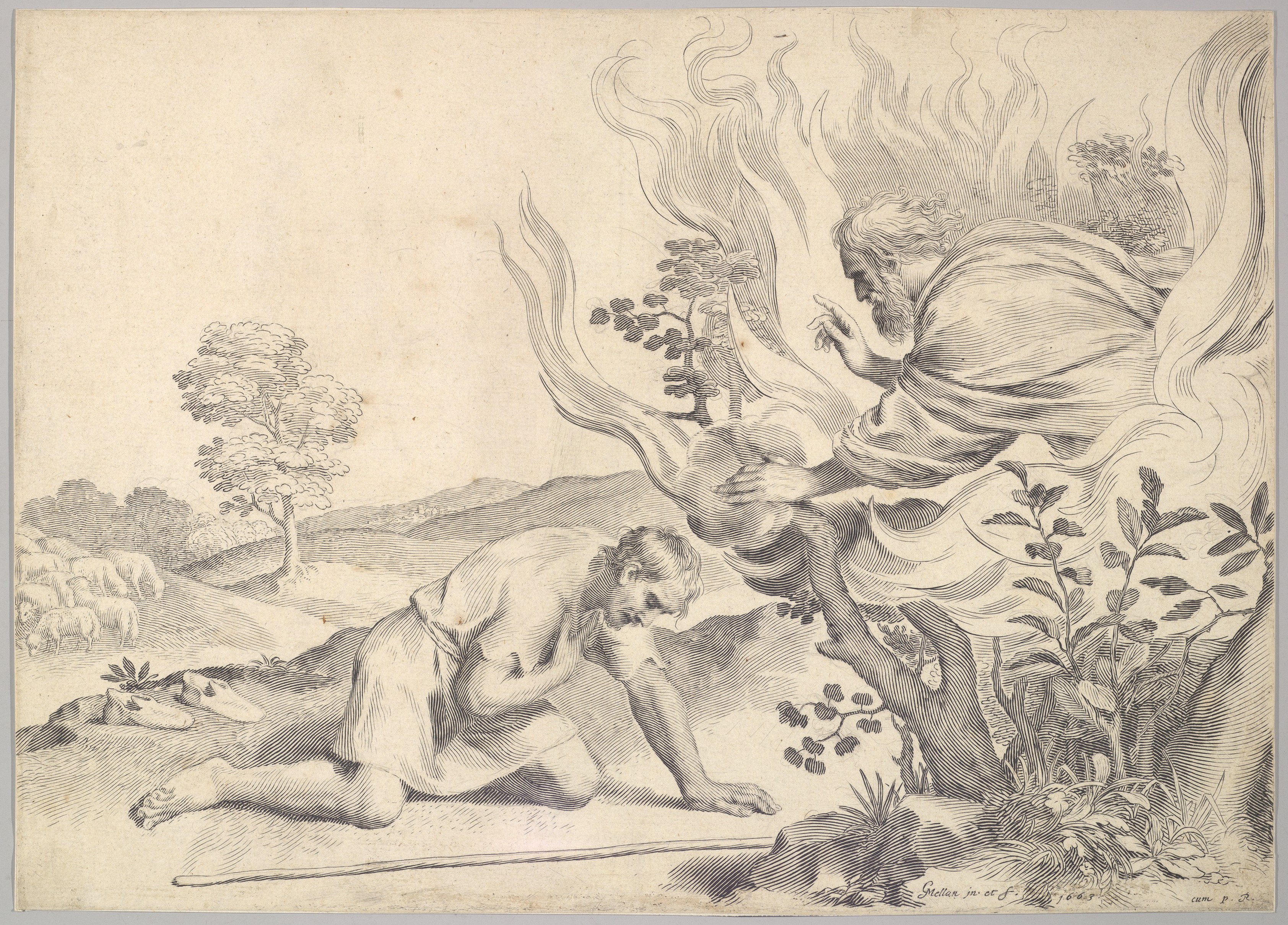
In today’s chapter, Moses is out tending his father-in-law’s flock (Note: Yet another theme of the Great Story. Moses was a shepherd, David was a shepherd, Jesus called Himself the “Good Shepherd,” Jesus told Peter to “feed my sheep.”). Moses sees a burning bush that keeps burning but doesn’t burn up. He investigates only to hear his name called. God speaks to Moses and calls him to “shepherd” his people out of Egypt.

In spiritual terms, this would be referred to as a “call” or “the call.” A person hears, senses, receives and then answers God’s calling out to them. It is a consistent theme in the Great Story from Adam through Saul of Tarsus. God calls, then the person answers and follows.

I find that this easily creates discomfort in many because there is a sense of there being spiritual “haves” (those who are “called”) and spiritual “have nots” (those who would say they haven’t). However, my own observation, and my understanding of the Great Story, is that Jesus made it clear that His “call” was universal. Jesus repeatedly told his audience that it was for anyone with “ears to hear.”

Listen! I am standing at the door, knocking; if you hear my voice and open the door, I will come in to you and eat with you, and you with me.

Revelation 3:20

“The call,” I have observed, is there for any and for all. This is why Jesus sends His followers “to the ends of the earth” to proclaim the good news. He is always knocking, though there is also His acknowledgement that there a some who will not hear or will not answer. To open the door, invite, receive, sit down together, have an intimate meal, talk, relate, and share… that’s a relationship between Jesus and the one who has heard the knock and opened the door.

That’s the difference. I have observed those who wear the label “Christian” but it appears to me that the label is based on their family’s (often generational) membership in a particular institution, their adherence to particular doctrinal statement or creed, and their religious observation of certain expectations regarding attendance, giving, and behavioral observations. It appears to be completely contractual without being in any way relational.

Those who have heard and answer the knock, or the call, have a different experience. Dietrich Bonhoeffer, a twentieth-century theologian who followed “the call” to follow Jesus to the hangman’s noose in a Nazi concentration camp, wrote in one his most famous works: “When Christ calls a man, He bids Him ‘Come and die.'” To answer the call, he observes, is always a form of surrender. For Moses, answering the call will mean surrendering his pride, his liberty, and his quiet Bedouin shepherd’s life to shepherd twelve unruly tribes out of Egypt and into forty years of wilderness wandering.

In the quiet this morning, I find myself remembering the moment I heard the knock, and heard the call. It has been almost forty years now since I opened the door and invited Jesus in for our first meal together. The journey began. It has never been about church membership, adherence to a doctrinal statement, or dutiful religious obligations. It’s been about surrendering, following, seeking, forgiving, giving, loving, and sharing; Always with the effort and desire to be increasingly kind, gentle, patient, faithful, and self-controlled like Jesus example. Sometimes, embellished with the use of words.

As Moses found out, the eloquent words part is not that important. But, that’s tomorrow’s chapter.

Thanks for reading, my friend. May your journey lead you to pleasant places today.

Featured image by Claude Mellan (1663). From the Met Collection. Public Domain.

The Appeal of a Cloistered Life

I am not asking you to take them out of the world, but I ask you to protect them from the evil one….As you have sent me into the world, so I have sent them into the world.
John 17:15, 18 (NRSV)

There has always been something about monastic life that has secretly appealed to me. I like the idea of leaving everything behind to live simply and humbly in quiet devotion. Whenever I hear or read about a monastery or convent, there’s a piece of my heart that envies the brothers and sisters who lead a cloistered life.

Along my journey I have recognized that there are different types of cloistered lives. In the Roman Catholic tradition it is a very specific separation from the world as the monks or nuns live in community with one another in a sequestered space. In the Evangelical tradition I have grown up in, we also have a version of the cloistered life. Our version of it is more subtle. We separate ourselves from the world while still appearing to live in it.

Our social lives revolve around our church or Christian school. We attend Christian concerts, frequent Christian bookstores, and hang out with others in Christian coffee shops. We read Christian fiction and listen to Christian music on Christian radio stations. We decorate our homes with Christian decor and watch Christian movies and Christian television programs.  We put Christian bumper stickers on our cars. We may appear to live in the world, but the reality is that our lives are carefully, surgically separated and cloistered from it.

I cannot, however, escape the simple and direct statements Jesus made in today’s chapter. He is sending His followers into the world. He is not sending them to live in insulated, cloistered community where they will be safe, secure, and insulated. He is sending them into the world where there is darkness, danger and the threat of harm. That is why the Father’s protection is necessary.

Today, I am thinking about the cloistered life. It will likely never cease to appeal to me. It is not, however, the path to which I am called. Jesus calls me, not out of the world, but into the world where I am often thought strange, where I am regularly misunderstood, and where I routinely feel awkward and out of place. That’s the mission, however. It was the mission for Jesus, and it’s the mission that He gave to those of us who follow.

chapter a day banner 2015


Counting the Cost of Family

(source: leshaines123 via Flickr)

[King Asa] even deposed his grandmother Maakah from her position as queen mother, because she had made a repulsive image for the worship of Asherah. Asa cut it down and burned it in the Kidron Valley. 1 Kings 15:13 (NIV)

I thought about Asa this morning as he attempted to bring spiritual reform to the tribe of Judah. I try to imagine the family drama playing out when he deposes Grandma from her position of political power. We are told very little about the situation in the text. Knowing a few things about the ways family systems operate I can only believe that it was a tremendously messy affair, especially when you consider that it was far more than just a family issue. Asa and his grandmother were vying for positions of power within the political and spiritual systems of the nation. It had to have gotten ugly inside the palace.

As I pondered Asa’s situation, I thought about a string of incidents in which Jesus emphasizes that following Him often happens at the cost of family relationships. Jesus told the crowds that those who follow Him must be willing to walk away from fathers, mothers, sisters and brothers. When a man said that he would follow Jesus just as soon as he fulfilled his obligation to bury his father, Jesus told the man to “let the dead bury their own dead” and to follow immediately. When another man said he would follow, but first had to go back and say good-bye to his family, Jesus’ response was sharp. He told the man that he shouldn’t put his hand on the plow and then turn back.

These certainly aren’t among the easy, Pinterest worthy sayings of Jesus’ teaching. Family is messy, and Jesus knew that broken family systems often hold people in spiritual bondage. The control that some families exert over individual members, while often appearing to be quite loving and healthy, can keep those individuals from following Jesus and achieving God’s purposes and callings for their lives.

Today, I’m thankful for family who encouraged me to follow Jesus and who gave me the freedom to embark on the course that God set for my life (even when I know they may not have agreed nor been comfortable with where it led). I’m saying a prayer for all of those for whom following Jesus comes at the cost of family relationships. And, I’m continuing to seek out how I can encourage our girls to follow Jesus and His path and purposes for their lives (even when it runs perpendicular to the paths and purposes I might desire for them).

wayfarer chapter index banner