Tag Archives: Bureaucracy

Anonymous Cogs

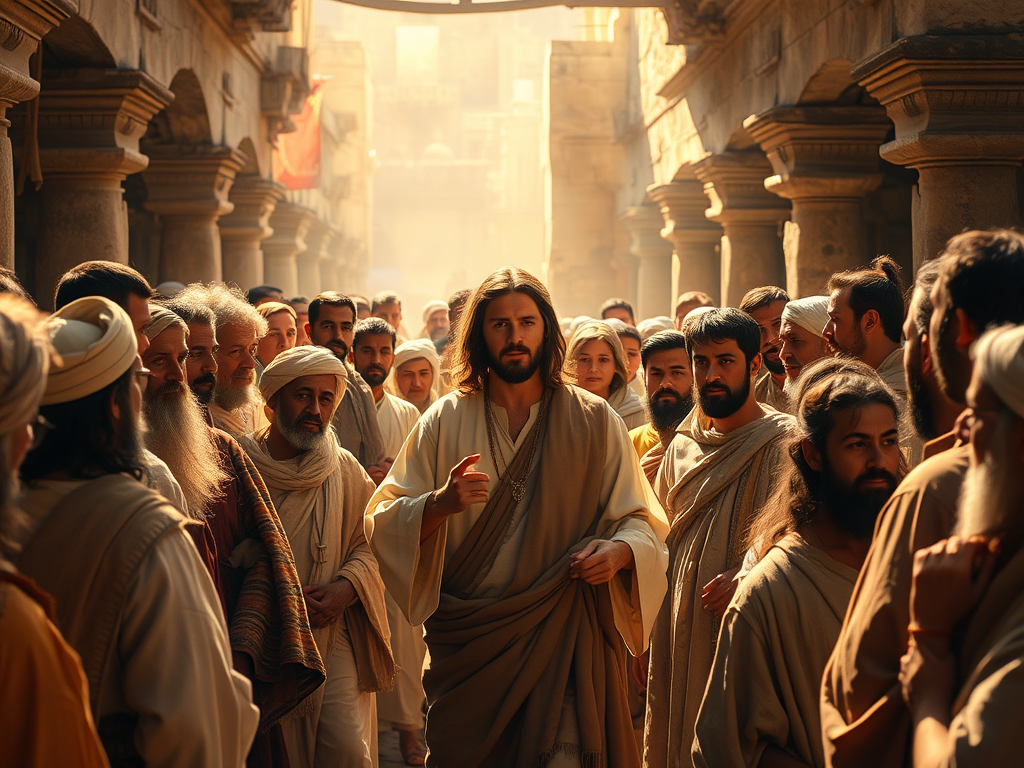
Then the chief priests, the teachers of the law and the elders looked for a way to arrest [Jesus] because they knew he had spoken the parable against them. But they were afraid of the crowd; so they left him and went away. Later they sent some of the Pharisees and Herodians to Jesus to catch him in his words.
Mark 12:12-13 (NIV)

Many years ago I stumbled upon a business blogger who went by the pseudonym Anonymous Cog. “AC” was one of those front-line minions in the institutional labyrinth known as corporate America. His vocation was fodder for the comic strip Dilbert and he blogged about the daily travails of being an “anonymous” cog in the giant corporate machine. AC and I began a back channel correspondence. I almost instantly recognized a kindred spirit in his words. Now, whenever I see people working inside of any human institution, I think to myself: “Anonymous cogs.”

Enneagram Type Fours are often known as the Individualists, and that’s me. Along my life journey, one of the things that I’ve learned about myself is that I’m typically (not always) better off when I am able to operate independently. Whenever I’ve found myself operating inside a large bureaucratic system it brings out a rebellious streak in me because they are typically full of silliness, foolishness, inefficiency, and injustice. They become insularly focused on power, internal politics, and of course money.

The Great Story is, at the heart of it, about an eternal conflict between the Kingdom of God and human empire. I’ve observed that human empire can be embodied in an individual human being, but it’s easiest to see it at work in the large institutions of this world. This includes, but is not limited to, the worldly kingdoms of government, commerce, finance, labor, academia, and even religion.

In today’s chapter, Mark is careful to name all of the institutional cogs that had set themselves up against Jesus. He names chief priests, teachers of the law, elders, Pharisees, Sadducees, and Herodians. Jerusalem was a regional seat of power, not only for religion, but also for government and commerce. The Roman Empire, the regional government of Herod, and the Chief Priests of the temple were all separate institutional powers who fought for wealth, clung to power, and controlled the lives of the anonymous cogs living in the region. These institutions held a constant and uneasy tension in the flow of power and wealth.

Jesus was a wrench in the works for all of them.

The clearing of the money-changers out of the Temple courts was Jesus’ way of shining a holy light on the corruption of the religious institutional human empire that the Hebrew leaders had assembled at the Temple. The crowds Jesus was drawing and Jesus’ sharp criticism was a potential powder keg. If riots broke out it would bring down the wrath of Rome, and that threatened both the power and money that flowed out of the Temple and into the hands of Herod and the Chief Priests.

The Son of God, an upstart outsider from rural Galilean backwaters, stands alone against the human institutional empires of government, commerce, and religion. That’s the picture that Mark is painting for us in today’s chapter. One of the things I’ve observed along my life journey is that human empires will always attempt to crush or eliminate any anonymous cog who threatens their system or the power and wealth of its leaders. I refer you to any daily news outlet for evidence.

In the quiet this morning, my individualist heart is stirred by this David vs. Goliath scenario that emerges from Mark’s stylus and the events he reports. At the same time, I have to return to what I wrote just a few paragraphs back. Human empire can exist in me. My individualism can be transformed into a personal empire with me on the throne of my own life, rigging everything I control to consolidate the flow of power, wealth, status, influence, and appearances so that it benefits me above all else. If I allow this to happen, I become a microcosm of the very institutional worldly empires that stand in opposition to God’s Kingdom. The anonymous cog becomes emperor of his own world.

Jesus calls me to live a Kingdom of God life amidst a world of human empires. He calls me as His disciple to seek after eternal things rather than temporal things. He calls me to serve rather than expect to be served. He tells me to be extravagant in my generosity rather than hoard things and money for myself. He calls me to humbly surrender my personal desires rather than demand my own way.

Kingdom of God or personal human empire? That’s the daily conflict. Every day I choose a side.

If you know anyone who might be encouraged by today’s post, please share.

These chapter-a-day blog posts are also available via podcast on all major podcast platforms including Apple, Google, and Spotify! Simply go to your podcast platform and search for “Wayfarer Tom Vander Well.” If it’s not on your platform, please let me know!

Opposition!

Now John’s disciples and the Pharisees were fasting. Some people came and asked Jesus, “How is it that John’s disciples and the disciples of the Pharisees are fasting, but yours are not?”
Mark 2:18 (NIV)

One of the things that I have learned along my life journey and in my career is that when you step up into the spotlight in front of a group of people, and you have something to say, you make yourself an easy target. When the something you have to say pushes against the orthodoxy of whatever group you’re addressing, then you’re an easy target stirring a hornet’s nest.

Mark’s biography of Jesus is the shortest of the four biographies of Jesus known as the “gospels” (Gospel means “good news”). In fact it’s 3700 words shorter than the next one on the list as far as word count (John) and almost 10,700 words shorter than Luke’s account.

What that means is that Mark is moving fast through the story and he’s only sharing the essentials. John wrote at the end of his biography that if all the stories were told about Jesus that could be told then all the libraries in the world could not contain them all. So, it begs the question of me as a reader, what can I learn from the choices Mark is making?

In today’s chapter, Mark shares four quick scenes from the early days of Jesus’ ministry. In each of the four, Jesus’ words or actions are challenged by others. Three of the four challenges come from different constituencies.

Jesus tells a man that his sins are forgiven, and “teachers of the law” told him he’d committed blasphemy. “Teachers of the law” refers to Scribes, which can be considered vocational lawyers who spent their lives interpreting the Law of Moses (the first five books of the Bible).

In the next scene, Jesus is having dinner with His new disciple, Levi (Matthew). Matthew was a tax collector, which meant he was seen as a Roman collaborator, he had money, and he didn’t hang out with good, religious Jews. Jesus is challenged by “teachers of the law who were Pharisees.” The Pharisees were a quasi-political party who held sway over the Jewish religion in Jesus’ day. So these challengers were not only vocational lawyers, but they were members of the most powerful political party within the rulers of Judaism. They challenged Jesus for mingling with socially and religiously unacceptable people.

As Jesus is beginning His ministry, His cousin John the Baptist, is at the height of his own popularity. John was rogue preacher. The same religious and political establishment who challenged Jesus, challenged John as well. John had a huge following with a lot of his own disciples. So in this next scene, it becomes clear that John has his disciples fasting and they notice that Jesus’ disciples are not. I love that Mark mentions “some people” who questioned this because along my life journey I’ve had many experiences with being told that “some people” have taken issue with something I’ve said or done. Even Jesus is getting the “some people” challenges from within the constituency of people who would naturally be His likely supporters and followers.

The final scene Mark shares has to do with rule-keeping. This time it is the straight-out members of the Pharisees who challenge the fact that Jesus’ disciples were picking off grain in a field for an afternoon snack. It happened to be the Sabbath, a religious day of rest that Pharisees policed to a fault.

In these four scenes, mark is telling us:

Jesus claimed to have the divine authority to forgive sins, and did a miracle to prove it. The religious establishment called it blasphemy.

Jesus socialized with people who were socially unacceptable to the fundamentalist and orthodox religious set.

Even the anti-establishment, populist types who were followers of John and were keenly interested in what Jesus was doing challenged the fact that He didn’t demand the same rigorous spiritual disciplines that John did.

And Jesus taught His disciples to follow the Spirit of the law of the Sabbath and not worry so much about the rule-keeping bureaucrats who took it upon themselves to police such things and punish the rule-breakers. Those rule-keeping bureaucrats got stirred up like hornets when Jesus claimed that His authority as “Lord of the Sabbath” trumped their authority as bureaucratic, establishment minions.

In the quiet this morning, I’m reminded of a quote by Albert Einstein who said that “Great spirits have always encountered violent opposition from mediocre minds.” I can’t help but be reminded that life is not only full of challenges, but also challengers. Mark seems to be telling me that Jesus Himself was challenged and opposed on all sides by both His supporters and His detractors. In the same way, I can expect to be challenged when I am being who God calls me to be, doing what God calls me do to, just like Jesus.

As a disciple of Jesus, I already know what He expects of me when challenged. It starts in my spirit which He tells me should be love, kindness, gentleness, and self-control. It then comes out in the form of blessing and praying for those who challenge me, hate me, and say all sorts of bad things about me. Jesus said,

“Not only that—count yourselves blessed every time people put you down or throw you out or speak lies about you to discredit me. What it means is that the truth is too close for comfort and they are uncomfortable. You can be glad when that happens—give a cheer, even!—for though they don’t like it, I do! And all heaven applauds. And know that you are in good company. My prophets and witnesses have always gotten into this kind of trouble.
Matthew 5:11-12 (MSG)

If you know anyone who might be encouraged by today’s post, please share.

Membership and Motivation

“We will not neglect the house of our God.”
Nehemiah 10:39 (NIV)

I had been serving as the pastor of a small church for about a year when I got a call asking for my presence at an emergency meeting of the church Elders. That’s never a comforting sign.

I arrived at the meeting to find that there was one major issue on the agenda: Me. Specifically, one of the Elders expressed grave concern that was not an official member of the church.

Big trouble.

“Um, you all called me to be your pastor. Doesn’t that, kinda by default, make me a member?”

Nope.

“So, what do I have to do to become a member?”

Write a letter requesting I be granted membership status, then present it to the congregation for a vote.

“Um…Okay.”

I happy to report that the vote was overwhelming in favor of me, the church’s Pastor, becoming a member.

Whew!” [cue: Wiping sweat from brow.]

What’s both funny and ironic is that the “membership” issue has arisen in almost every church I’ve attended and served. I admit that I am a bit of a maverick after having experiences like the one I’ve just related. It is a piece of the institution of church that is obviously very important to certain individuals. I take issue with it, however. Every church institution I’ve ever attended has had a large number of people who jumped through the institutional hoops to become official “members,” but they never come or participate in any way. No one ever complains or has a problem with this. Meanwhile, if I actively participate with my consistent attendance, service, and offerings but don’t jump through the institutional hoops to get a piece of paper telling me that I’m “in,” then certain people get their undies in a bunch.

Thank you for letting me vent.

In today’s chapter, Nehemiah records what amounts to a legal document that records the commitment of the exiles to follow the Law of Moses and to provide prescribed offerings that would be necessary for the carrying out of the sacrificial system of the Temple. This was no small thing. The sacrificial system established through Moses was an intricate, even burdensome, system of sacrifices that required a large population’s offerings to keep it moving as laid out. Their legal contract was signed and sealed. It is obvious that Nehemiah felt it important to make the people’s obedience to the sacrificial system legally binding.

Here’s what I find fascinating as I mull things over in the quiet. The sacrificial system had been in place for roughly a thousand years. Time and time again it fell apart and became given over to various forms of religious and political corruption. That was part of Nehemiah’s “recounting” in yesterday’s chapter. So, Governor Nehemiah decides to try a legally binding agreement to try and keep people in line.

It didn’t work.

Some 400 years later when Jesus arrives on the scene the Temple system had become a corrupt, powerful money-making racket run by Godfather-esque high priests bent on lining their pockets and controlling the system. That’s why Jesus went postal on the Temple’s currency exchange marketplace not just once, but twice. It’s why he brutally denounced and called out the priests and teachers of the law for their corruption (read Matthew 23).

It’s also why Jesus time and time again taught the masses by starting with “You have heard it said…” then “But, I say….” The crux of Jesus’ message was that God’s concern was not about rule keeping and legally binding adherence to prescribed religious practices. God’s concern was for a change of heart that motivates real, tangible change in the way we love, live, give, and relate to others.

As a follower of Jesus, that’s where I want to follow. I want to invest my time, energy, and resources through my local gathering of Jesus followers because the love of Christ compels me, not because I have a piece of paper telling me I’m a “member” of an institution subject to the responsibilities thereof.

For the record, I am an official member of my local church out of loving deference to my brothers and sisters who find such things important. But, that’s not why I serve, give, and support. My motivation for doing my part is a matter of the heart.