Tag Archives: Boring

Just Another Day, or Not

“At the Lord’s command Moses recorded the stages in their journey. This is their journey by stages…
Numbers 33:2 (NIV)

We’re experiencing what is likely to be Summer’s final blast of heat here in Iowa. Yesterday afternoon Wendy and I were invited to our friends swimming pool to cool off and enjoy before autumn followed by winter irrevocably descends upon us. It was a glorious afternoon.

Of course, the conversation with friends eventually led to “So, what does your week hold?” The reality is that right now my life is in a pretty static daily rhythm that, to be honest, can easily feel like a rut. I spend an hour early each morning working on my book. Then I have my quiet time, meditate on a chapter-a-day, write this post, record the podcast. exercise, breakfast, work projects, marketing, networking, message prep for next Sunday, dinner, time with Wendy, and then to bed.

Rinse-and-repeat.

Do you ever wake up in the morning feeling like you’re in the movie Groundhog Day? Here we go again.

In today’s chapter, God commands Moses to record every stage of the Hebrews’ journey from Egypt to the Promised Land. Of late I’ve been listening to The Bible Project’s prodcasts on the Exodus as I walk. It’s been fascinating as they’ve unpacked that the Exodus theme is repeated over and over and over again throughout the Great Story

The road out of slavery.
The road in-between and through the wilderness.
The road in to the Promised Land.

The entire book of Numbers is about the road in-between and God commands Moses to record every stage of the journey and there are a lot of them. Only a very few stages that are listed have any detail provided. Most of them are simply that they went from one place and camped at another place.

Welcome to the life journey in which exceptional moments both high and low in which I experience the road out and the road in are connected with the long slog of the road in between. Every day I trek from Point A to Point B and sometimes it seems I’m not getting anywhere at all.

So why would God tell Moses to record it to be remembered forever?

Because every stage of the journey is an important part of the journey. Even the mundane days in which we simply move the ball forward are important. Jewish people read today’s chapter as liturgy. There are lessons to be learned in the daily disciplines of simply doing what needs to be done to get where God is leading.

Because God is present and faithful at every stage of the journey. It is easily forgotten that God is doing something novel in this Exodus journey. In those days a god was fixed to one location and had a temple they visited. Yahweh was literally dwelling with and traveling with His people on the journey. This was unique. No other gods did that. It is a reminder that I worship Jesus, Immanuel, which means “God with us.” He is present with me and in me on this mundane 21,689th day of my slog through the earthly wilderness. He is leading me to a Promised Land. My job is to follow every day.

Because we all need to look back from time to time. Glancing back, I can see how far I’ve come. I’m not where I was. I’ve progressed. I’ve grown. I’ve matured. Glancing back also reminds me of mistakes I don’t want to repeat, lessons I want to remember, and all of the ways God has blessed and faithfully provided.

In the quiet this morning I’m staring down a rather boring and mundane Monday. How about you?

Let’s lace ‘em up, my friend. This morning I’m reminded that we’re getting somewhere, even if it feels like Groundhog Day.

If you know anyone who might be encouraged by today’s post, please share.

Promotional graphic for Tom Vander Well's Wayfarer blog and podcast, featuring icons of various podcast platforms with a photo of Tom Vander Well.
These chapter-a-day blog posts are also available via podcast on all major podcast platforms including Apple, Google, and Spotify! Simply go to your podcast platform and search for “Wayfarer Tom Vander Well.” If it’s not on your platform, please let me know!
An illustration or graphic featuring an open book icon, symbolizing access to literature or scripture.

The Next Generation

These are the ones counted by Moses and Eleazar the priest when they counted the Israelites on the plains of Moab by the Jordan across from Jericho. Not one of them was among those counted by Moses and Aaron the priest when they counted the Israelites in the Desert of Sinai.
Numbers 26:63-64 (NIIV)

I am currently in a season of life in which I am experiencing some major transitions. There has been transition at work as my business partner of many years is retiring and a new team member has joined us. I am currently transitioning out of a year of leadership in our local community theatre and assisting the new, young elected leader of the organization in assuming her leadership. Over the past couple of years our local gathering of Jesus’ followers experienced the retirement of our leadership team and an entire new generation of leaders emerge. Even in our company’s customer research we’re finding that generational shifts and differences are having an unprecedented impact on business.

In every area of life, I am reminded that my life journey is moving into an entirely new stretch of road.

Our chapter-a-day journey continues through the book of Numbers, and like its title, the book is full of counting. As we near the end of the Hebrews road through the wilderness, The tribes are camped by the river Jordan across from Jericho. God tells Moses to take another census of the Hebrew tribes. The book began with the same census, but that was 38 years earlier when the tribes were about to set out from Mt. Sinai. Aaron is dead. Miriam is dead. Different names are at the heads of each tribe. It is a completely new generation preparing to enter the Promised Land than the one that set out from Sinai in chapter one.

In the quiet this morning, the chill of autumn air wafts into my open office window. Even nature is whispering to me the annual reminder that the old passes away into the death of winter so that in the spring new life may emerge.

Chapters like today’s are easy to ignore or overlook. What spiritual lesson can an ancient census possibly have? Yet there are spiritual lessons lurking beneath the numbering.

Jewish scholars have traditionally viewed the census metaphorically as a Shepherd numbering sheep after a storm or an attack. The wilderness journey has been difficult. The Great Shepherd lovingly and protectively is numbering the flock, and as Jesus pointed out, God’s Kingdom is about not leaving one lost sheep behind.

Throughout the Great Story there is a threaded theme of the Book of Life containing all of the names of those in God’s Kingdom. Paul hints in his letter to the Romans that the climactic final chapters of the Great Story will not begin until the “full number” of Gentiles is reached (Rom 11:25). It’s a reminder that the entire Great Story is one metaphorical life span from the birth of creation to the death of history and an entirely new beginning that is introduced in the final chapters of Revelation.

And so, even as I experience all of the transitions in life, family, work, and community, I am reminded by everything from today’s chapter to the cool autumn breeze that this is all part of the natural flow of this earthly journey as well as the larger Story that God is authoring across time and eternity. I suppose I can fight against it. I can bitch about it. I can sink into fear, anxiety, or despair. Or, I can flow with it with it in faith that God is faithful through the generations, and that His promises never fail. There are good things ahead. They may be different, but they are good.

Lace ‘em up. The journey continues.

NOTE: Wendy and I are heading out for a week of vacation wrapped around the Labor Day holiday. I plan to return to our chapter-a-day trek through Numbers on Thursday, September 4th. If you need a fix until then, please check out one or more of these links to my chapter-a-day posts by book that can fill you until I return! Have a great holiday weekend!

Ruth
Jonah
Malachi
1 Thessalonians
James

If you know anyone who might be encouraged by today’s post, please share.

Promotional graphic for Tom Vander Well's Wayfarer blog and podcast, featuring icons of various podcast platforms with a photo of Tom Vander Well.
These chapter-a-day blog posts are also available via podcast on all major podcast platforms including Apple, Google, and Spotify! Simply go to your podcast platform and search for “Wayfarer Tom Vander Well.” If it’s not on your platform, please let me know!
Bible Gateway logo with an open book icon, representing online scripture access.

Connect, Disconnect, Reconnect

The whole company that had returned from exile built temporary shelters and lived in them. From the days of Joshua son of Nun until that day, the Israelites had not celebrated it like this. And their joy was very great.
Nehemiah 8:17 (NIV)

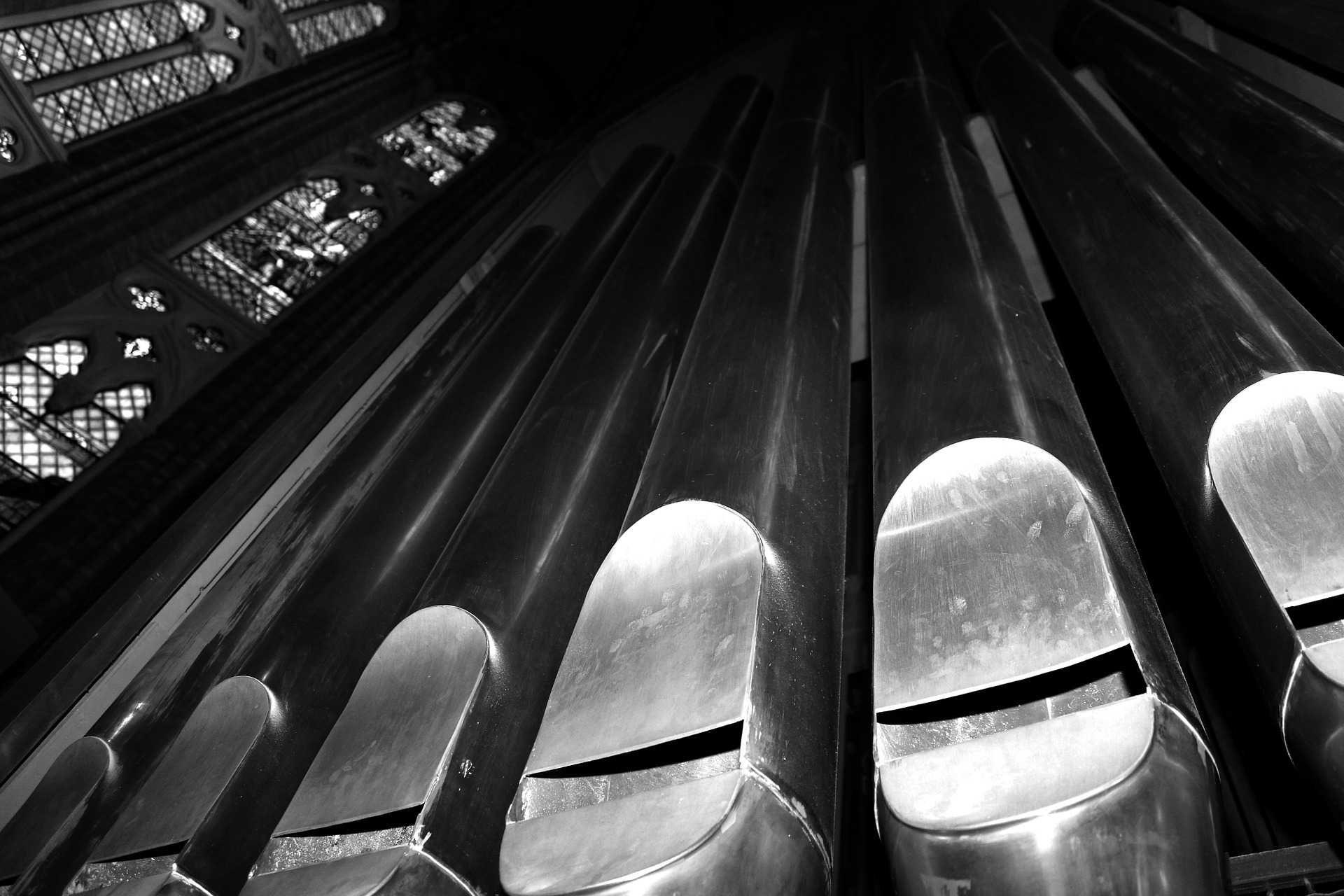
As a child growing up, I attended a protestant church that practiced what I would call a very “high church” worship. I was part of a children’s choir. We wore robes with embellishments that corresponded to the season of the church calendar, as did the minister. There was a lot of pomp and grand tradition complete with a pipe organ and stained-glass windows. The service contained many prescribed liturgical practices, responsive readings, and the like. As a child, it was at first all I knew and I found meaning in it all. As I got older, however, it all seemed a bit boring and empty. There grew within me a huge disconnect between my spirit and all the rote repetition of those high-church liturgical practices.

I became a follower of Jesus in my teens and quickly left the church of my childhood. I connected with a different church that had what I would characterize as a freer and more laid-back worship style. It felt more personal to me.

The ironic thing is, as I have continued on in my spiritual journey I have found myself reconnecting with some of the types of liturgical tradition I abandoned in my childhood. When I was a child they were empty of meaning for me, but as I have returned to them I have found them to have all sorts of rich meaning for me at this particular waypoint of life.

In today’s chapter, Ezra reads the law of Moses (the first five books of the Bible: Genesis, Exodus, Leviticus, Number, and Deuteronomy) out loud to all of the assembled exiles who had returned to Jerusalem and repaired the walls of the city. This is some 400-500 years before Jesus. The vast majority of the people were illiterate and had lived all or most of their lives in Babylon. Many had likely never heard the law of Moses read before.

In the Hebrew tradition, the law of Moses prescribed various feasts and festivals throughout the seasons of the year. The “Feast of Tabernacles” (a Tabernacle is like a tent or temporary shelter) happened in the fall and commemorated the Hebrew people camping out as they left slavery in Egypt and returned to the land of Canaan. When the Ezra and the people read about this festival, they realized that they should be celebrating it right then. So, they did.

Ezra and the people of Jerusalem reconnected to a tradition that had been lost and forgotten for centuries, and it was filled with all sorts of meaning for them.

Along my life journey, I have observed that this happens to us a lot as human beings. Traditions and rituals get abandoned and fade away as they lose meaning and connection for those of us repeating them. At some point down life’s road, we rediscover them at a point in our spiritual journey when they meaningfully connect and become spiritually filling. What was old becomes new, what was lost to us as meaningless and boring we find to have all sorts of meaning.

In the quiet this morning I am revisiting the many spiritual traditions that I have experienced in my journey. I’ve experienced a plethora of traditions from the liturgical high-church of my childhood to the Evangelical show. I have sat in the silence of a Quaker meeting house, been in the frenzy of a Charismatic revival meeting, and the energetic worship of a black Baptist church. I long ago abandoned any notion of any tradition being “right” or “wrong.” They are all simply different traditions that have something to teach me. Some connect with my spirit in ways others do not, but each tradition and ritual has something to teach me at different waypoints of my spiritual journey if I’m open and willing to learn them.

Mining Nuggets in a Boring Chapter

English: King Solomon in Old Age (1Kings 4:29-...
English: King Solomon in Old Age (Photo credit: Wikipedia)

Adoniram son of Abda (was) in charge of forced labor.

Solomon had twelve district governors over all Israel, who supplied provisions for the king and the royal household. Each one had to provide supplies for one month in the year.
1 Kings 4: 6b-7 (NIV)


Many people have told me over the years that they struggle to read the Old Testament because its ‘s boring. A chapter like the one today is probably a good example. Compared to the buttery, heart-felt lyrics of David’s Psalms, today’s chapter is dry toast.  The book of Kings was written as a historical record of Solomon’s reign. As such, it records of the names of his officials. But seriously, who really cares today who served as Solomon’s cook?


As I’ve read through these books over the years, I’ve learned to approach chapters like today’s with a certain frame of mind. You have to look for small details, repeated patterns, and names that are familiar. Sometimes these nuggets, when you put them together, become clues to a broader understanding of the context.


For example, today I noticed a few nuggets:


  • The description of Solomon’s kingdom is notably large and lucrative, especially compared to what his father David started with, and what the first king, Saul, had before David. Conclusion: David’s conquests were paying off, and Solomon was raking it in.
  • Solomon had TWELVE officials scattered around as district governors to provide the king and his household with provisions (not just food, it’s likely they also provided slave labor, military conscriptions, concubines for the kings sizable harem, livestock, building materials, and etc.). Conclusion: As I read through this and contemplated what it must have been like for the people in this district being forced to give up their stuff for the king’s pleasure, I suddenly remembered God giving a warning to the people through Samuel just two generations earlier. The people of Israel are beginning to experience exactly what God warned them:

Samuel told all the words of the Lord to the people who were asking him for a king. He said, “This is what the king who will reign over you will claim as his rights: He will take your sons and make them serve with his chariots and horses, and they will run in front of his chariots. Some he will assign to be commanders of thousands and commanders of fifties, and others to plow his ground and reap his harvest, and still others to make weapons of war and equipment for his chariots. He will take your daughters to be perfumers and cooks and bakers. He will take the best of your fields and vineyards and olive groves and give them to his attendants. He will take a tenth of your grain and of your vintage and give it to his officials and attendants. Your male and female servants and the best of your cattle and donkeys he will take for his own use. He will take a tenth of your flocks, and you yourselves will become his slaves. When that day comes, you will cry out for relief from the king you have chosen, but the Lord will not answer you in that day. 1 Samuel 8:10-18


  • Two of the 12 governors were sons-in-law, married to Solomon’s wives. Conclusion: A little nepotism has taken hold in the monarchy. History teaches us that political nepotism usually breeds favoritism, conspiracy, racketeering, poor management, and scandal. I’m seeing a tragic flaw emerging in Solomon’s wisdom.
  • David and Solomon were both noted for building their palaces and building the Temple, but I noticed that Adoniram is providing them with forced labor or slave labor (Adoniram’s has been at it a while, his name came up in 2 Samuel 20:24). Conclusion: Eventually forced labor, especially the forced labor of your own people, leads to civil unrest.

Taxation, nepotism, and slave labor. [Scratching my head, carefully avoiding the receding hairline] If I’m standing in Solomon’s sandals things seem pretty cushy. If I’m standing in the sandals of a common citizen on the outskirts of Gilead who just watched the king’s official walk off with my children, my livestock, and a two month’s supply of olive oil, I’m not exactly feeling the love.


I feel a storm cloud rising on the horizon.

Today, I’m thinking about how we sometimes don’t see the forest for the trees. This happens in families. This happens in business. This happens in churches. This happens in government. I’m thinking about broader implications of words, decisions, and actions. I’m praying for discernment to see the bigger picture around me, and for courage to make tough choices based on what I see and perceive.