Tag Archives: Acts 19

Best of ’24: #4 Three Forces Rule the World

Three Forces Rule the World (CaD Acts 19) Wayfarer

The assembly was in confusion: Some were shouting one thing, some another. Most of the people did not even know why they were there.
Acts 19:32 (NIV)

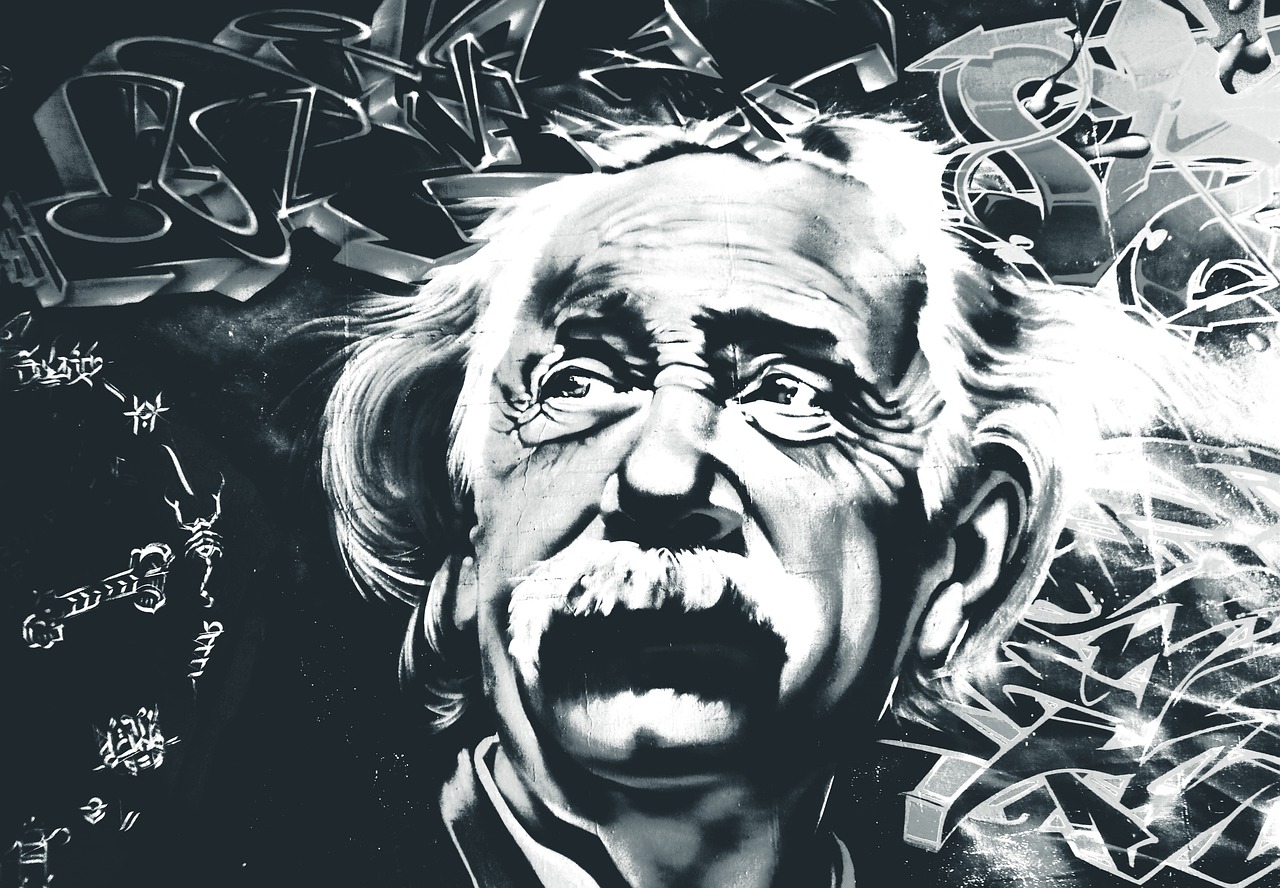
I saw a meme on social media over the weekend that caught my eye. It was a quote from Albert Einstein who said, “Three great forces rule the world: stupidity, fear, and greed.” The more I meditated on this notion, the more I realized the truth of it.

The quote came to mind this morning as I read today’s chapter because all three forces are at work during Paul’s stay in Ephesus. Paul’s presence and Jesus’ Message had a powerful effect in Ephesus. So many people were choosing to believe in Jesus that the local union of idol makers began to fear (there’s the fear) that they would lose significant income (there’s the greed). So, they grabbed two of Paul’s companions and started a protest in the city’s amphitheater. The protest grew into a confusing, riotous mob, and many of the people who joined in had no idea what they were rioting about (there’s the stupidity). Eventually, a local official got control of the crowd and convinced them to disperse and take up their grievances through proper legal channels.

The local Jews had been so obstinate in refusing to believe Jesus’ Message through Paul, that Paul gave up going to the local synagogue. I found it fascinating that the local Jews participated in the idol makers’ protest. How fascinating that for hundreds of years, God spoke through the prophets and sent His people into exile in part because they wouldn’t give up their idolatry. Here, the Jews of Ephesus reject God’s Son and support the local idolatry union. The more things change, the more they stay the same.

In the quiet this morning, I found myself meditating on how the forces of fear, greed, and stupidity are at play in our own time and in our world. Paul and the disciples in Ephesus displayed the opposite of fear, greed, and stupidity. Paul was unafraid of the angry mob but wisely chose not to go to the theater and make a bad situation worse. When an entire group of sorcerers became believers, they chose to burn all of their sorcery and witchcraft scrolls which were worth fifty thousand drachmas. A greedy person would have sold them instead.

On the night of His arrest, Jesus told His disciples that He wanted them in the world proclaiming and living out His Message. In a world driven by fear, greed, and stupidity, Jesus wanted His disciples to live lives of peace, generosity, and wisdom so that others in the world could see the contrast, and be drawn to the Message. It’s a good reminder as I start another work week. Lord, help my daily life to be marked by your peace, generosity, and wisdom.

If you know anyone who might be encouraged by today’s post, please share.

These chapter-a-day blog posts are also available via podcast on all major podcast platforms including Apple, Google, and Spotify! Simply go to your podcast platform and search for “Wayfarer Tom Vander Well.” If it’s not on your platform, please let me know!

Three Forces Rule the World

Three Forces Rule the World (CaD Acts 19) Wayfarer

The assembly was in confusion: Some were shouting one thing, some another. Most of the people did not even know why they were there.
Acts 19:32 (NIV)

I saw a meme on social media over the weekend that caught my eye. It was a quote from Albert Einstein who said, “Three great forces rule the world: stupidity, fear, and greed.” The more I meditated on this notion, the more I realized the truth of it.

The quote came to mind this morning as I read today’s chapter because all three forces are at work during Paul’s stay in Ephesus. Paul’s presence and Jesus’ Message had a powerful effect in Ephesus. So many people were choosing to believe in Jesus that the local union of idol makers began to fear (there’s the fear) that they would lose significant income (there’s the greed). So, they grabbed two of Paul’s companions and started a protest in the city’s amphitheater. The protest grew into a confusing, riotous mob, and many of the people who joined in had no idea what they were rioting about (there’s the stupidity). Eventually, a local official got control of the crowd and convinced them to disperse and take up their grievances through proper legal channels.

The local Jews had been so obstinate in refusing to believe Jesus’ Message through Paul, that Paul gave up going to the local synagogue. I found it fascinating that the local Jews participated in the idol makers’ protest. How fascinating that for hundreds of years, God spoke through the prophets and sent His people into exile in part because they wouldn’t give up their idolatry. Here, the Jews of Ephesus reject God’s Son and support the local idolatry union. The more things change, the more they stay the same.

In the quiet this morning, I found myself meditating on how the forces of fear, greed, and stupidity are at play in our own time and in our world. Paul and the disciples in Ephesus displayed the opposite of fear, greed, and stupidity. Paul was unafraid of the angry mob but wisely chose not to go to the theater and make a bad situation worse. When an entire group of sorcerers became believers, they chose to burn all of their sorcery and witchcraft scrolls which were worth fifty thousand drachmas. A greedy person would have sold them instead.

On the night of His arrest, Jesus told His disciples that He wanted them in the world proclaiming and living out His Message. In a world driven by fear, greed, and stupidity, Jesus wanted His disciples to live lives of peace, generosity, and wisdom so that others in the world could see the contrast, and be drawn to the Message. It’s a good reminder as I start another work week. Lord, help my daily life to be marked by your peace, generosity, and wisdom.

If you know anyone who might be encouraged by today’s post, please share.

Of Mobs and Motives

The assembly was in confusion: Some were shouting one thing, some another.Most of the people did not even know why they were there.
Acts 19:32 (NIV)

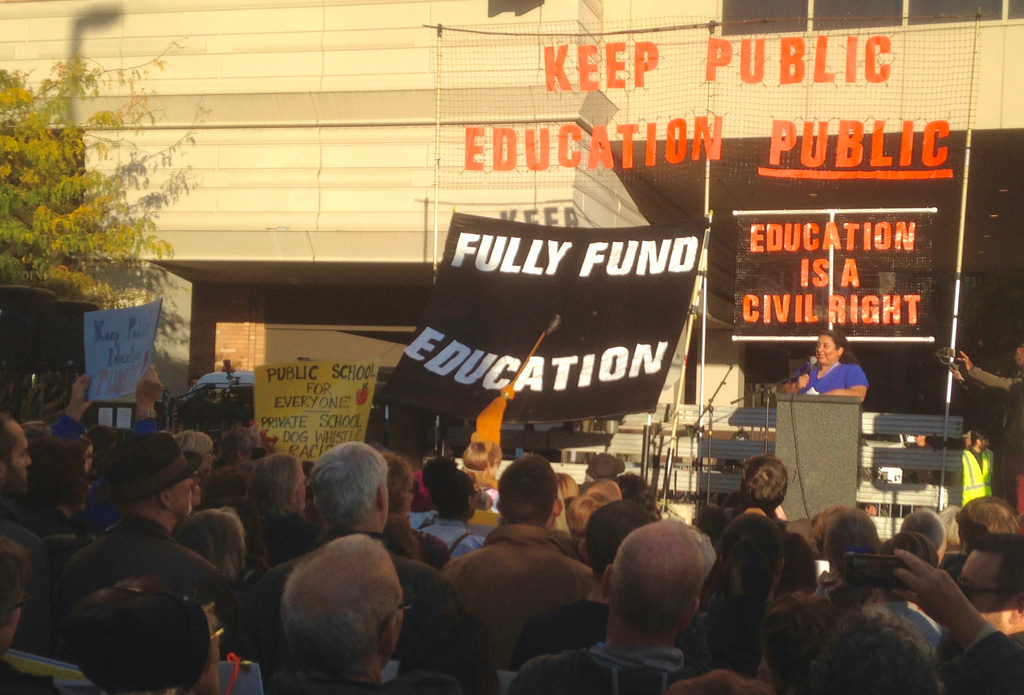
While I was in high school there was a large education bill making its way through the state legislature. The teachers in my school began wearing “Save Our Schools” buttons. Some teachers spoke to us over a series of weeks about how important this bill was and predicted doom, gloom, and the end of education as we knew it were the law not to pass. Extra-curriclar programs would go away, athletics programs wouldn’t have the funding they needed, and students would suffer, we were told.

A short while later it was announced that on a certain afternoon any student who desired could take the afternoon off of school, ride a bus to the state capitol, and participate in a rally of teachers and students to march on the statehouse.

Afternoon off of school? Are you kidding me?! I’d go on a tour of a sewage treatment facility if it meant getting to skip English, Algebra II and American History.

And so it was I found myself in a mob of students and teachers from all over the area chanting “Save our schools!” as we marched up Capitol hill. We filed into the Statehouse and up into the gallery of the legislature where debate was taking place on the floor regarding the school bill. There I listened to the debate between legislators regarding the bill and found out that the bill was put forth by the teachers’ union and was primarily about teacher compensation. Now, I’m all for teachers being paid well and funding public education, but the more I listened to the debate and the particulars of the bill were revealed, the more I realized that the legislation itself wasn’t really about the things I had been told.

I will never forget sitting in that gallery and the sudden realization that I’d allowed myself to be a pawn in a political rally simply to get out of school for an afternoon. I even remembering watching the evening news and how the rally and the issues were described. The truth is, I hadn’t truly known what the issues really were, or why I was there. I vowed that day never to participate in anything like that again without being fully versed in the issues at stake and fully believing in the cause for which I marched.

In today’s chapter a riot breaks out in the city of Ephesus because Paul and the Jesus movement became a threat to the local trade union who made idols. Suddenly the Jews and the Tradesman, who would normally be antagonists (for what good Jew would support idolatry?) had a common political foe in Paul and the Jesus movement. A mob breaks out and  everyone in Ephesus runs to the local amphitheater to find out what’s going on.

Then Luke makes an astute observation: Most of the people did not even know why they were there.

Along my life journey I’ve observed just what lemmings human beings can be. My experience at the school rally and my studies of mass media have made me discerning regarding what I’m told and shown in the news as it relates to political rallies. Even as I worship among my local gathering of believers, I sometimes wonder how many truly come because they believe and how many are there because it’s what they were taught they should do by the family or societal systems that raised them.

Of course, I can’t control or even really know the motives of others, but I know and am responsible for myself. This morning in the quiet I find myself thinking about the things I do each day, each week, and the events to which I give my time.

Do I even know why I am there?


Religion, Commerce, and the Soul

cover-Time-19870406-66703A number of those who practiced magic collected their books and burned them publicly; when the value of these books was calculated, it was found to come to fifty thousand silver coins.

A man named Demetrius, a silversmith who made silver shrines of Artemis, brought no little business to the artisans. These he gathered together, with the workers of the same trade, and said, “Men, you know that we get our wealth from this business.”
Acts 19:19, 24-25 (NRSV)

Back when I was in high school and college there was a crazy period of time when there was no shortage of scandals centering around a group of prominent American televangelists. Jim and Tammy Faye Bakker were the couple that the media couldn’t seem to get enough of, but there was also Jimmy Swaggart and others who leveraged their television ministries into personal profit machines and media empires. A closer inspection of these ministry moguls produced plenty of odd and salacious fodder for the tabloids. Many televangelists fell in a strange train wreck of disgrace that was too compelling to look away.

I was reminded of the uncomfortable tension between faith and commerce this morning as I read today’s chapter. There were two groups of people described who stood in stark contrast to one another. I had never really noticed this in my previous journeys through the Book of Acts.

First, there are those who had vocationally practiced different types of exorcism, magic, and spiritism who became followers of Jesus (v. 18-20). Upon their choice to place their faith in and follow Jesus they abandoned their spiritually dark professions and burned down their old lives. This, of course, meant that would have to begin new lives and careers. This is a picture of Jesus’ consistent admonishment for people to repent (literally, to about face and go the opposite direction) and follow. Old things pass away, new things come. There is a spiritual rebirth evidenced by their willingness to experience a huge financial loss and, in faith, walk away from that which was spiritually dark to begin a new path following the Light.

Next, there is Demetrius and the guild of silversmiths tied to the temple of Artemis. The Temple of Artemis in Ephesus was one of the seven wonders of the ancient world and Artemis of Ephesus was a popular fertility idol, her long body covered in breasts (or perhaps their bull testicles, scholars aren’t quite sure). Not unlike the media empires of the televangelists, the Temple of Artemis was a tourist attraction and a lucrative, religious cash cow. With the trending of Jesus, His message, and His followers the business of Artemis idols, trinkets, and souvenirs  was taking a huge financial hit. The local metal workers union was not happy. The response of Demetrius and his fellow merchants was to create a public riot and threaten bodily harm to the followers of Jesus along with their forcible expulsion from Ephesus.

I consider one group has a spiritual transformation that results in a willingness to suffer financial and vocational loss. Then I think of the other group who are hardened to preserve their finances and vocation at all costs. Finally, I think about the disgraced televangelists from my youth. I’m not sitting in judgment of them, rather I ponder if spiritually I’m not more like them than I’d care to admit. I wonder if they didn’t start out with sincere hearts that were hardened over time by their lucrative, religious cash cows and personal empires.

Today, I am doing some soul searching. Which example in today’s chapter am I more like, and what is the condition of my heart? Am I willing to suffer temporal loss for eternal gain, or will I cling tightly to that which is temporal at the sacrifice of my soul?

Chapter-a-Day Acts 19

ROMAN EMPIRE, ANTONIUS PIUS 138-161 b
ROMAN EMPIRE, ANTONIUS PIUS 138-161 b (Photo credit: woody1778a)

“Gentlemen, you know that our wealth comes from this business. But as you have seen and heard, this man Paul has persuaded many people that handmade gods aren’t really gods at all. And he’s done this not only here in Ephesus but throughout the entire province! Of course, I’m not just talking about the loss of public respect for our business. I’m also concerned that the temple of the great goddess Artemis will lose its influence and that Artemis—this magnificent goddess worshiped throughout the province of Asia and all around the world—will be robbed of her great prestige!” Acts 19:25-27 (NLT)

A few years ago I read a book about the history of Dutch culture. Having come from Dutch heritage and living in a town steeped in its’ Dutch past, I thought it would be an interesting read. It was.

The author argued that Dutch culture sprang from three intertwining influences. On one side there was the influence of the great Dutch Catholic  philosopher, Erasmus who instilled in the Dutch the culture of education and the humanities. On the other side was the Protestant Dutch Calvinists who instilled strict morality and a strong work ethic. When the opposite poles of Catholic and Protestant influence conflicted with one another (and they always conflicted), it was the third major influence that became the tie breaker and trump card: Commerce. In other words: believe what you want across the spectrum of Catholic and Protestant doctrine, but don’t mess with business.

In today’s chapter we see a similar issue boiling to the surface. Paul’s missionary exploits were having the desired effect. Many people were putting their faith in Jesus and becoming followers of this new Christian religion called “The Way.” The idolatrous Greco-Roman culture with its dizzying array of gods did not seem to care much about this upstart religion, until it started to have an effect on the bottom line. Paul’s teaching about turning away from idolatry to the one true God created an economic recession for the local idol makers. Call the local chamber. Organize the Smith’s Union and start a rally. Don’t mess with business.

When spiritual truth is having maximum earthly effect, the spiritual transformation in individuals and communities creates systemic disruption in family systems, cultural systems, economic systems, political systems, and systems of commerce. Disruption creates anxiety. Anxiety creates fear. Fear creates strong, emotional reactivity.

“Don’t imagine that I came to bring peace to the earth! I came not to bring peace, but a sword. I have come to set a man against his father, a daughter against her mother,
and a daughter-in-law against her mother-in-law.” – Jesus