Tag Archives: 1 Kings 16

Power and Chaos

Zimri came in, struck [Elah] down and killed him in the twenty-seventh year of Asa king of Judah. Then he succeeded [Elah] as king.
1 Kings 16:10 (NIV)

I’ve observed over my life journey that the kingdoms of this world are really all about power: the power to control others, the power to acquire for self, and the power to maintain power.

Tyrants wield power like blunt force trauma. They lie, deceive, kill and destroy in order to rise to the top of their kingdom. Then they eliminate any threat, use force to control the masses, and entrench themselves at the top of their kingdom.

Politicians are more subtle. They manipulate the rules to their advantage in order to ensure their coffers are always full, their personal assets favorably rise, campaign and election rules are rigged in their favor, and their opponents are smeared as extremists. The endgame is the same, however: control others, acquire for self, and maintain power and privilege.

Media use their power of influence to control what their viewers see and hear, boost their fame and ratings, help those who align with their political bent, and demonize those who don’t.

Religious institutions use the power of religious authority to create spiritual hierarchies of authority. Those at the top control mass behavior with that authority coupled with guilt, shame, and the threat of ostracization, ex-communication, public shaming, or other punishments.

I could go on to talk about the abuse of power that exists in businesses, families, sports, community groups, charitable organizations, and every human system.

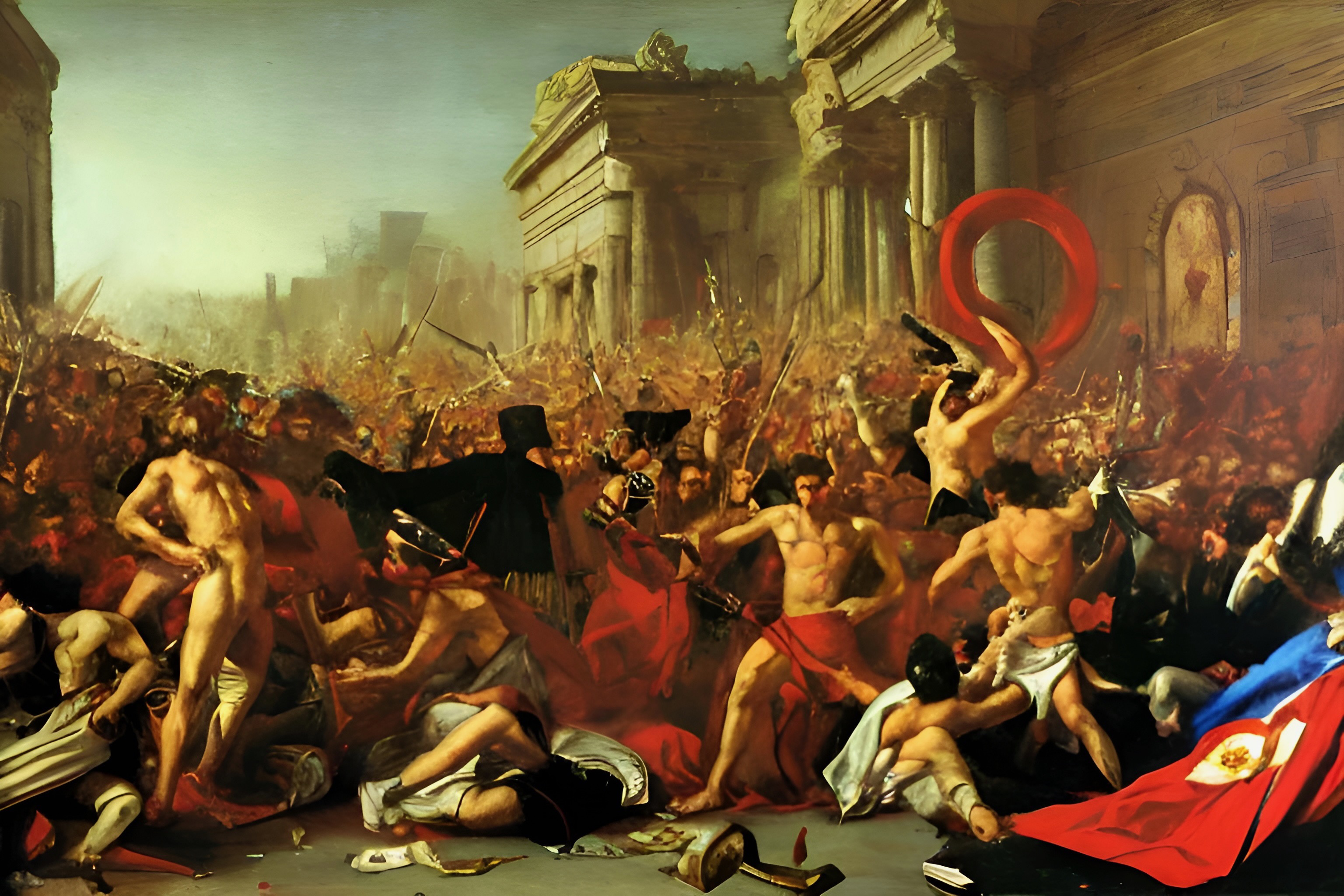
Today’s chapter follows the quick succession of kings in the northern Kingdom of Israel. While the southern Kingdom of Judah was committed to being ruled by the dynastic line of David, the northern Kingdom of Israel was a free-for-all. The game of thrones in the north was a virtual “King of the Mountain.” The throne was there for the taking of anyone who could seize and wield power.

Bashaa reigns 24 years and dies.

Elah succeeds his father, Basshaa, and reigns for two years.

Zimri, a military officer, assassinates Elah, slaughters the entire family of Bashaa, and declares himself king. He reigns seven days.

Omri, a military general, is hailed as king by the army under his command as soon as they hear of Zimri’s coup. Realizing he was doomed, Zimri commits suicide by lighting the palace on fire and dying in the flames.

Tibni, a prominent public figure, challenges Omri for the throne, dividing the nation into two competing factions. Omri (with the military behind him) proves stronger and ascends the throne for 12 years.

Ahab, son of Omri, succeeds his father on the throne.

Corruption, assassination, military coup, suicide, destruction, and division. It’s not a picture of peace and harmony.

In the quiet this morning, I’m reminded how differently Jesus prescribed His game plan for changing the world. His people wanted a Messiah who was a divine version of the top-down power under which they’d suffered for centuries. They wanted a divine Messiah who would wipe out their enemies while raising them to positions of power and prominence. But from the very beginning, Jesus was the living embodiment of God’s word through the prophet Isaiah: “My ways are not your ways.”

In a real sense, that is what Christmas is about.

The way of Jesus was that of an omnipotent God humbly lowering Himself and taking on the role of servant, becoming human and submitting Himself to all of the constraints, weaknesses, conflicts, labor, and pain that come with being human. Jesus’ taught his followers this same example. Humble yourself, consider others ahead of yourself, love your enemies, bless those who persecute you, be content with what you have been given, lead by serving, control your thoughts, words, and behavior with others, and live a life marked by love, joy, peace, patience kindness, goodness, faithfulness, and gentleness.

Jesus’ paradigm wasn’t to change the world with top-down power, coercion, threat, force, and control. Jesus’ paradigm was to change the world was that of one person changing the life of another individual with love, motivating that individual to pay it forward toward others who will, in turn, have changed hearts motivating them to pay it forward in loving yet others who will pay it forward in loving still others, until an organic, underground movement of love spreads across humanity.

By the way, it really worked for a few hundred years. At that point, the Prince of this World made a brilliant move in the chess match between him and God. The Prince of this World gave the Jesus Movement worldly power. They became a Kingdom of this World. Almost overnight the organic, persecuted followers of Jesus found themselves with the power, authority, and earthly riches of the Holy Roman Empire. Chaos followed just as it always follows the kingdoms of this world under the dominion of the Prince of this World.

But that wasn’t Jesus’ paradigm. There was no earthly power, or control, or wealth in a stable outside of Bethlehem.

I adore that.

If you know anyone who might be encouraged by today’s post, please share.

Today’s featured image was generated with Wonder A.I.

Peace and Stability in Volatile Times

source: eastcentralillinoiswxphotography93 via Flickr


In the twenty-sixth year of Asa king of Judah…
In the twenty-seventh year of Asa king of Judah…
In the thirty-first year of Asa king of Judah…
In the thirty-eighth year of Asa king of Judah…
1 Kings 16:8, 15, 23, 29 (NIV)


After the reign of Solomon, the nation of Israel was split in two. Ten of Israel’s tribes comprise the northern kingdom of Israel with the capital in Samaria. A “Game of Thrones” is a good way to describe the political situation in the northern kingdom as the throne is occupied by a string of strongmen who largely ascended by power, violence and force. Nineteen kings occupy the throne over a period of about 200 years before being conquered by the Assyrians.


The tribes of Judah and Benjamin comprise the southern kingdom of Judah with the capital in Jerusalem. Judah remains loyal to the house of David and clings to God’s promises to David. The throne is occupied by nineteen kings and one queen from the line of David over a period of about 350 years before Judah is conquered by the Babylonians.


I found it interesting that King Asa of Judah was described as being faithful to God and he reigned over 40 years. It struck me while reading today’s chapter that during Asa’s reign the political situation in the northern kingdom is extremely volatile with a series of military leaders and strong men claiming the throne. Every one of them is described as being committed to the local pagan idols and gods rather than the God of Israel. In the case of Zimri, he held the throne for an entire week before committing suicide by burning the palace down around him. Yikes.


This morning I’m pondering the contrast in the two nations during Asa’s reign. It’s an apt word picture for how I think of my life with and without my faith. Despite the ebb and flow of blessing and tragedy along life’s road, I find a high degree of peace and stability from my faith in Jesus – much like Judah seemed to experience during Asa’s reign. I think back to what I remember life being like before my decision to follow Jesus and it feels a lot like the political situation in Israel with life swaying aimlessly with each shift in the power of emotions or circumstances.


Today, I’m thankful for peace and stability even in the midst of volatile life changes.

wayfarer chapter index banner


Chapter-a-Day 1 Kings 16

Jesus owns a breadmaker. It was under Ahab's rule that Hiel of Bethel refortified Jericho, but at a terrible cost: He ritually sacrificed his firstborn son Abiram at the laying of the foundation, and his youngest son Segub at the setting up of the gates. This is exactly what Joshua son of Nun said would happen1 Kings 16:34 (MSG)

"If there is any purpose or value in this whole thing, it's completely lost on me," my wife said to me in the car yesterday. Behind her dark sunglasses, I knew her eyes were filled with tears. I understood. I feel the same confusion. Her statement echoed in my spirit the rest of the day and I've been chewing on it.

The purpose and value of difficult circumstances do not usually show themselves in the moment because they are not momentary in nature. We call them "lessons learned in time" because, for us, time is a required ingredient. We have a wonderful, state-of-the-art breadmaker in our kitchen. As good as it is, it still takes 3-4 hours to bake a loaf of bread. It can't speed up the time necessary for the yeast to perform its chemical reactions and make the dough rise.

God has all sorts of time because, unlike me, he exists outside of time's boundaries. It's likely that Hiel of Bethel and the people gathered at the dedication ceremonies at Jericho had no idea that the terrible sacrifice of his own sons had been spoken of 600 years earlier by Joshua. That's like Cristopher Columbus talking about the recent earthquake in Haiti. It seems an eternity to us, but not to God. He exists concurrently in both moments.

The difficult stretch of the journey I'm experiencing today is frustrating, agonizing, and confusing. I don't get it in the moment. I can only trust that someday I, or my children, or my grandchildren, or my great grandchildren will be on another difficult stretch and I will look back in time to find that the lessons learned through this time will profit me for that time.

Creative Commons photo courtesy of Flickr and solidstate76